

The Single Arm Decline Crunch is a dynamic variation that will revolutionize your ab routine. This advanced, weighted crunch provides essential unilateral core training, forcing your stabilizer muscles to work overtime. Unlike standard ab exercises, this movement specifically challenges your anti-rotation stability, which is critical for daily life and athletic performance.
Master the technique to build symmetrical core strength and achieve deep abdominal definition. Utilizing the decline bench workout is the fastest path to a powerful, resilient midsection that truly functions as your body’s cornerstone.
The Power of Unilateral Core Training: Benefits of the Single Arm Decline Crunch
Did you realize that training one arm with a weight while performing the Decline Crunch is a genius hack? This unilateral core training method is crucial. It forces the body to constantly stabilize against rotational forces. This significantly enhances your oblique development and overall resilience. Furthermore, the constant fight for balance teaches you better body control under tension, improving every other lift you perform.
Maximizing Core Engagement and Anti-Rotation Stability
The Single Arm Decline Crunch is the ultimate anti-rotation exercise. When you hold a weight in one hand, your spine desperately tries to twist toward the heavier side. Your core muscles must work harder to prevent this rotation. This unique challenge drastically increases core engagement. The resulting anti-rotation stability is critical for sports like golf, throwing, or any quick-change movement, providing exceptional injury prevention.
Enhancing Core Strength and Definition
Looking for those deeply etched six-pack muscles? Single Arm Decline Crunch exercise provides maximum muscle isolation to the rectus abdominis. By adding load to the decline crunch, you introduce essential resistance training. This mechanical tension is the proven stimulus for hypertrophy, leading to thicker, more defined ab tissue. This advanced approach promotes beautiful, symmetrical core development that shines through.
Improving Posture and Alleviating Lower Back Pain
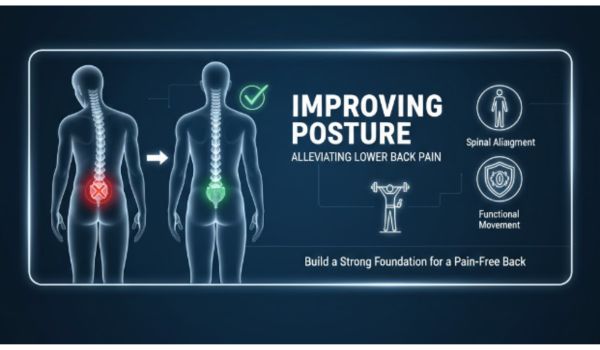
A strong, balanced core acts like a natural corset, providing essential support for your entire torso and spine. When done with correct form, this Single Arm Decline Crunch exercise actually helps in lower back strain and back pain prevention. Strengthening the abdominals and balancing the hip flexor engagement reduces the strain on the lumbar region. This synergy is key to maintaining excellent, upright posture throughout your day.
Anatomy of the Move: Muscles Targeted by the Single Arm Decline Crunch
Understanding the muscles worked by decline crunch helps you maximize every rep. This Single Arm Decline Crunch exercise technique recruits several muscle groups simultaneously, but the emphasis shifts dramatically due to the single-arm load. You must focus your intent on the working muscles for maximum benefit.
Primary Core Movers (The Six-Pack Muscles)
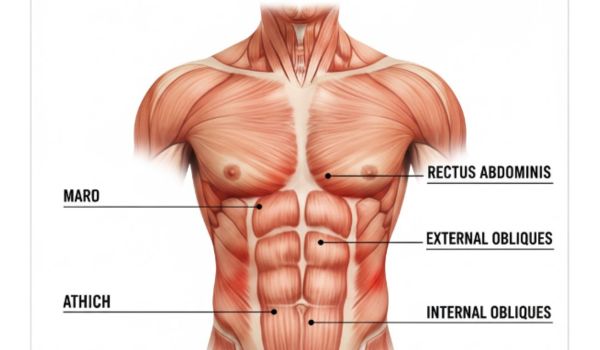
The main player in any crunch is the Rectus Abdominis, but the single-arm load makes this version special. The External Obliques on the side opposite the weight are highly recruited to stop your body from twisting. Furthermore, the deeper Internal Obliques and the Transversus Abdominis act as primary stabilizers, creating a strong core from the inside out.
Secondary and Stabilizing Muscles
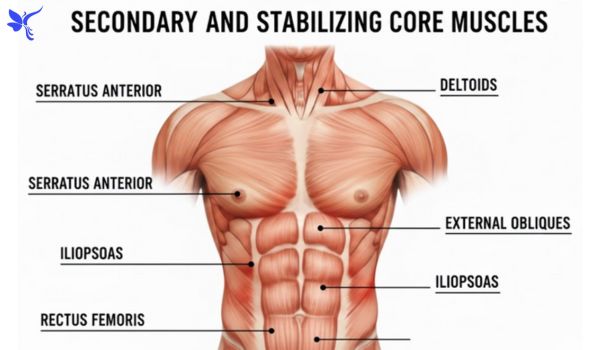
Do not forget the crucial stabilizers. The Serratus Anterior, which looks like finger-like projections near your ribs, helps stabilize the shoulder girdle as you press the weight. The Hip Flexors (including the Iliopsoas and Rectus Femoris) assist the spinal flexion but should not dominate the movement. Even your Shoulders (Deltoids) assist in maintaining the weight’s position.
Mastering the Single Arm Decline Crunch: Step-by-Step Execution
You must adhere to the proper technique for this weighted ab exercise. This ensures exercise safety and maximal targeting of the core muscles. Always prioritize form correction over lifting heavier weights.
Proper Bench Setup and Starting Position
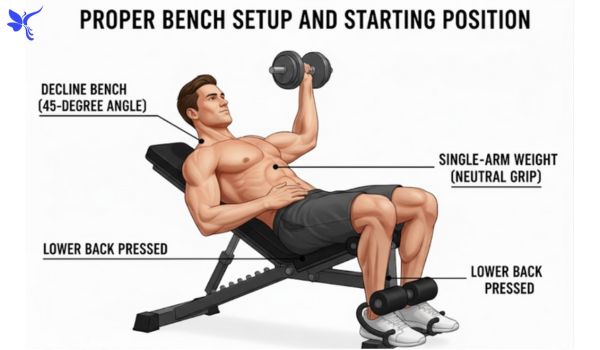
First, secure your feet firmly on the decline bench workout pad. Set the decline angle for crunches typically between 30 and 45 degrees; 45 degrees offers maximal difficulty. Select your best weight for decline crunch—you should struggle slightly on the last two reps. Now, place the dumbbell placement on bench carefully and grip it using a neutral grip in one hand.
The Concentric Phase (The Lift)
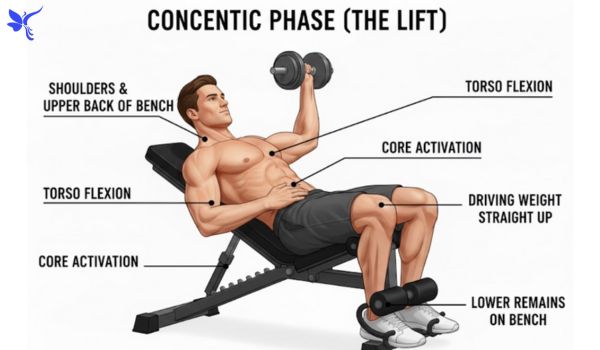
Start the lift by deliberately curling your shoulders and upper back off the bench. Focus solely on core activation and generating torso flexion. Drive the weight straight up toward the ceiling. Remember this is a crunch, meaning you should only achieve partial spinal flexion—your lower back should remain on the bench. Do not pull with your neck.
The Peak Contraction and Eccentric Phase (The Lowering)
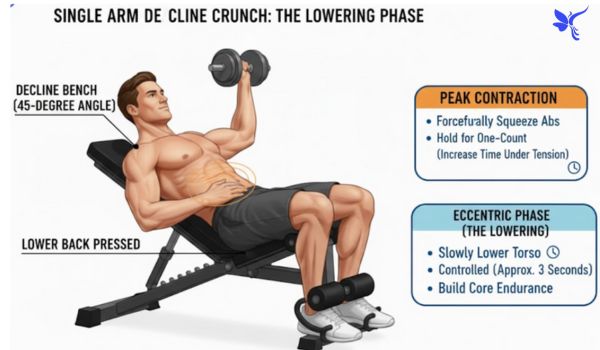
At the top, forcefully squeeze your abs and hold the peak contraction for a one-count. This increases the Time Under Tension for abs. Next, begin the eccentric phase by slowly lowering your torso back to the start. The controlled descent should last about three seconds. This slow lowering builds tremendous core endurance vs maximal strength.
Common Mistakes and How to Fix Them
The number one error is Controlling momentum poorly, turning it into a jerky movement. This typically happens when people use too heavy a weight or rush the eccentric phase. Another frequent issue is letting the lower back lift off the bench, which indicates too much hip flexor engagement. To fix this, lighten the load and focus only on the upper abdominal curl.
Modifying the Challenge: Single Arm Decline Crunch Variations
The versatility of the Single Arm Decline Crunch allows for effective progression and regression. No matter your current core strength level, there is a way to make this ab exercise work for you. Always seek to increase difficulty methodically.
Beginner Adjustments and Progressions
If you find the weighted crunch too challenging, start with a simple bodyweight decline crunch to perfect your spinal flexion pattern. You can then progress to the two-handed weighted decline crunch using a lighter dumbbell or kettlebell training for enhanced stability. Mastering the correct form here is paramount before attempting the single-arm version.
Advanced Challenges and Intensity Techniques
Ready for extreme challenge? Try the Double Weight Crunch, using a weight in each hand to increase total load. For hypertrophy focus, intentionally slow the Eccentric Phase to five seconds, optimizing Time Under Tension. You can also introduce a slight, controlled twist at the top of the movement, turning it into a decline oblique press to further enhance oblique development.
Single Arm Decline Crunch Alternatives and Complementary Exercises
To develop truly complete core strength and abdominal definition, you need a well-rounded training program. Supplementing the Single Arm Decline Crunch with other targeted movements will yield faster, more impressive results. Think of your ab routine as a full workout structure.
Focus on Core Isolation and Anti-Extension
For the lower portion of the Rectus Abdominis and improved hip control, incorporate Captain’s Chair Leg Raises. They are excellent for muscle isolation. To bolster your anti-extension stability, integrate the Plank with Dips. This move effectively taxes the obliques and deep stabilizers, building core endurance.
Focus on Core Endurance and Fat Burning
To ensure your defined abs are visible, you must address body fat percentage. Pairing the Single Arm Decline Crunch with a metabolic activity is genius. Use Mountain Climbers between sets. This method creates a powerful superset, simultaneously building muscle and burning calories.
Equipment-Free Alternatives
When you are traveling or without a decline bench, you need options. The Vertical Weight Plate Press (performed as a floor crunch holding a plate) provides similar resistance training and upper ab isolation. This is an excellent alternative for maintaining your ab routine anywhere.
Decline Crunches vs. Decline Sit-Ups: Understanding the Difference
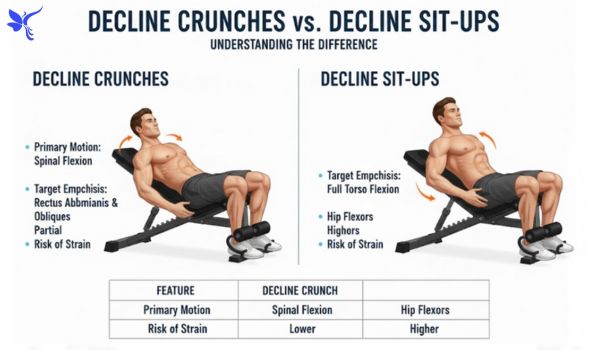
This comparison addresses a key user question: Decline crunches vs sit-ups difference. While they both use a decline bench, their mechanics and muscles worked are fundamentally different. Understanding this distinction is vital for customizing your ab routine.
| Feature | Decline Crunch (Weighted Crunch) | Decline Sit-Up |
| Primary Motion | Spinal Flexion (Curling the spine) | Full Torso Flexion (Hinging at the hip) |
| Target Emphasis | Rectus Abdominis & Obliques | Hip Flexors (Assisting Muscles) |
| Range of Motion | Partial (Shoulders off the bench) | Full (Chest to Knees) |
| Risk of Strain | Lower (Focuses on abs) | Higher (Can cause hip flexor tightness) |
Exercise Form: What Defines the Movement?
The fundamental difference lies in the axis of movement. The Decline Crunch focuses on isolating the upper body via spinal flexion, where you only lift your shoulders and upper back off the bench. Conversely, the Decline Sit-Up involves a full torso lift, engaging the hips more substantially. This difference changes the nature of the resistance training.
Target Muscles: Where Does the Emphasis Lie?
The Decline Crunch offers maximum muscle isolation to the Rectus Abdominis and obliques, as the movement stops before the powerful Hip Flexors fully take over. The Decline Sit-Up involves a much higher contribution from the Hip Flexors (Assisting Muscles). If your primary goal is pure abdominal definition, the crunch is superior.
Risk and Safety Considerations
From an exercise safety perspective, the crunch is often preferred for lower back strain and back pain prevention. The limited range of motion keeps the work focused on the abs, whereas the full range of the sit-up can exacerbate existing hip flexor tightness or lower back issues. Always choose the technique that feels safest for your body.
Programming and Tips for Maximum Results
Achieving truly impressive abdominal definition requires strategic planning. You need to integrate the Single Arm Decline Crunch effectively into your overall training program. These technique tips ensure you get the most out of every workout structure.
Incorporating the Exercise into Your Routine
Aim for 2-3 sets of 12-15 reps per side in your ab routine. The optimal time to perform the Single Arm Decline Crunch is often at the end of a resistance training session. For example, if you follow an Example PPL split integration (Push/Pull/Legs), place it on your Pull or Leg day. This ensures your core is not fatigued for heavy, compound lifts like the squat or deadlift.
Nutrition and Recovery for Visible Abs
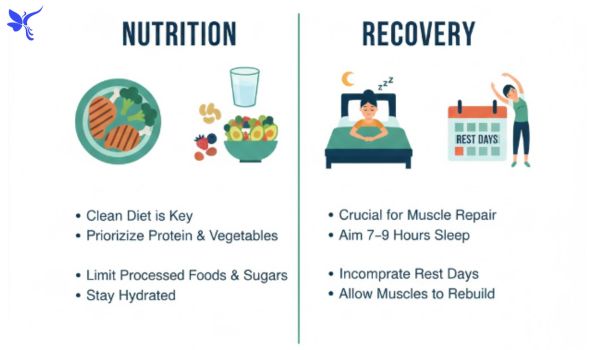
Remember the old saying: abs are made in the kitchen. No amount of weighted ab exercises will show results if you have a high body fat percentage. Focus on a clean diet to reveal the abdominal definition you are building. Furthermore, never skip rest days; proper rest and muscle repair are just as vital as the eccentric phase for growth.
Conclusion: Build Your Strongest Instrument
The Single Arm Decline Crunch is a uniquely effective exercise that elevates your core strength beyond the ordinary. By embracing the challenge of unilateral core training and mastering the correct form, you are building a balanced, resilient, and beautifully defined midsection. Apply these detailed technique tips and see your ab routine transform. Now go put in the consistent effort and forge your strongest instrument!
Frequently Asked Questions (FAQ)
What are decline crunches good for?
They are excellent for increasing the intensity and load on the rectus abdominis to build core strength and definition.
What are the only 5 exercises you’ll ever need?
A holistic routine often includes squats, deadlifts, presses, rows, and core isolation movements like the Decline Crunch.
Does decline crunch target upper or lower abs?
They primarily target the entire Rectus Abdominis, but the spinal flexion focus often feels more intense in the upper abs.
Are decline crunches safe?
Yes, they are safe when performed with correct form, focusing on spinal flexion and avoiding momentum to protect the lower back.
Why do people avoid decline bench?
Some avoid it due to the perceived difficulty or if they have existing lower back strain, often confusing the crunch with the riskier sit-up.
What is the #1 best AB workout?
The best routine is subjective, but weighted, challenging movements like the Single Arm Decline Crunch are among the most effective.

Muddasir Tahir is the founder and lead researcher at Lifestyle Dominates. With a strong passion for fitness and self-improvement, Muddasir spends his time studying human movement and high-performance habits.
His goal is to provide informational topics that are easy to understand and backed by careful research. Muddasir believes that everyone has the power to improve their lifestyle by mastering the right techniques.
When he isn’t researching new ways to help people dominate their lives, he is dedicated to building a community of like-minded individuals who strive for strength and a better mindset every day.