

Are you searching for the definitive way to sculpt those highly sought-after capped shoulders? Many fitness enthusiasts mistakenly believe that only dumbbell lateral raises can build the medial deltoid, missing a powerful tool.
The lateral raise machine is a piece of specialized selectorized strength equipment that offers unparalleled shoulder isolation. Its fixed path of motion removes momentum from the equation, ensuring the tension hits the precise muscle you are targeting for maximum growth. Learning how to properly utilize this deltoid machine can revolutionize your strength training progression.
What Is a Lateral Raise Machine?
The lateral raise machine is a specialized piece of selectorized strength equipment meticulously engineered to isolate the medial deltoid. This sophisticated deltoid machine uses a system of levers, pulleys, and a weight stack to apply resistance through a specific, predetermined arc. Its mechanism and function ensure the resistance curve aligns perfectly with the muscle’s strength profile. This makes it an incredibly effective tool for strength training progression.
These machines come in several common formats. The seated lateral raise machine is arguably the most prevalent design, offering maximum stability. You might also encounter a side lateral raise machine or a shoulder lateral raise machine in commercial gyms. Less common but still available is the standing lateral raise machine. When looking at premium models, the HAMMER STRENGTH SELECT LATERAL RAISE is a benchmark for quality. Furthermore, models like the atlantis lateral raise machine boast robust construction.
The cost considerations for equipment like these are significant. For example, a high-end, commercial gym equipment model might feature a sturdy 11-gauge steel frame and a heavy 200 lb weight stack. Understanding how much is an atlantis lateral raise machine is key if you plan a serious investment.
4 Major Benefits of a Lateral Raise Machine
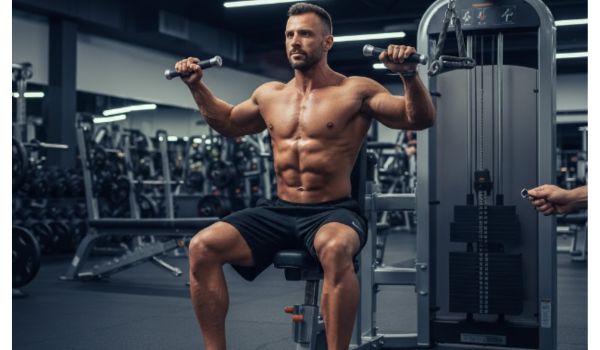
1. Targeted Shoulder Isolation
The primary virtue of the lateral raise machine is its capacity for pure muscle training isolation. It provides a rigid, fixed path of motion. This ingenious design minimizes the unwanted involvement of auxiliary muscles like your traps and back. For lifters who struggle to maintain proper form for lateral raises with free weights, this machine is the best machine for side deltoids. This dedicated focus ensures that every ounce of effort is channeled directly into your medial delt training, leading directly to those round capped shoulders.
2. Joint-Friendly Movement
For anyone struggling with chronic pain or previous shoulder injury rehabilitation, the fixed and guided nature of the lateral raise machine is a lifesaver. This equipment offers a remarkably joint-friendly movement for shoulders. The smooth, controlled motion reduces the torsional stress placed on the elbow and shoulder joints that often occurs when stabilizing dumbbells. It provides a secure environment for high-volume trainers to push their delts without fear of compromising joint integrity.
3. Progressive Overload Made Easy
Achieving consistent progressive overload is the fundamental principle of hypertrophy. The lateral raise machine simplifies this process dramatically. Adjusting the resistance is as simple as moving a pin. This contrasts sharply with the often awkward increments of dumbbell lateral raises. Small weight increments allow for precise adjustments. This facilitates a true Progressive Overload technique on machines. It ensures you can continuously increase tension over time without large, risky jumps in load.
4. Consistent Tension
Free weight lateral raises struggle with a kinetic dilemma. The point of maximum leverage and effort is near the top, but the tension drops severely at the bottom. The lateral raise machine solves this by maintaining Consistent Tension throughout the range of motion. This means there are no “easy zones” for your muscles to relax. The constant resistance maximizes the time your deltoids spend under tension. This is a critical factor for stimulating muscle growth.
Lateral Raise Form on Machines vs. Free Weights (Machine vs. Free Weight Lateral Raises: Form & Effectiveness)
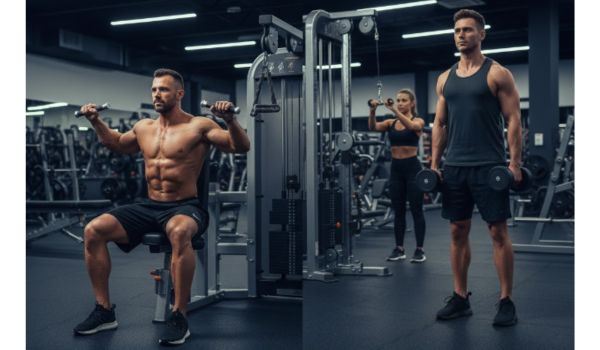
Mastering proper form for lateral raises is easier on the machine than with free weights. To learn how to use the lateral raise machine, you first need the right setup. Setting up involves correctly adjusting the seat height so that your shoulders align perfectly with the axis of rotation. Next, ensure your arms rest properly against the pads. During execution, focus on initiating the lift by driving your elbows out and up, not swinging the weight. Control the lowering phase slowly; the eccentric portion is vital for growth.
Contrasting this with dumbbell lateral raises reveals significant differences. What are dumbbell lateral raises? They are a fantastic functional exercise demanding superior stability and core engagement. However, they are also prone to cheating, and tension profiles are suboptimal. This leads to the age-old debate: Are cable lateral raises better than dumbbell or machine? Cable lateral raises offer a better tension curve than dumbbells because the cables provide lateral resistance throughout. However, they still require more stabilization than the machine. The ultimate answer is to incorporate all three variations for comprehensive deltoid development.
| Exercise Type | Targeted Isolation | Tension Curve | Stability Required | Joint-Friendly Movement |
| Lateral Raise Machine | Excellent | Consistent Tension | Low | High |
| Cable Lateral Raise | High | Good (Lateral) | Moderate | Moderate |
| Dumbbell Lateral Raise | Moderate (Requires Skill) | Poor (Top Heavy) | High | Moderate |
The Barriers to Adding a Lateral Raise Machine to a Home Gym (Home Gym Headaches: The Barriers to Owning a Lateral Raise Machine)
While the effectiveness of the lateral raise machine is undeniable, integrating one into a private space presents challenges. The most immediate concern is Space Constraints. Traditional machines, particularly commercial gym equipment models like the Hammer Strength Select Lateral Raise, require a large, dedicated footprint. For most home gym enthusiasts, sacrificing that much precious garage or basement space for a single-purpose item is simply unrealistic.
The second major hurdle is the Cost Considerations for this type of specialized equipment. Lateral raise machines demand a substantial gym equipment investment. We are talking hundreds or even thousands of dollars. The initial purchase price is high. Also, you have to account for shipping and professional assembly. Finally, most machines are characterized by a pronounced Lack of Versatility. Unlike a rack or a bench which serves dozens of functions, the lateral raise machine is a true one-trick pony. This makes justifying the steep price tag difficult for budget-conscious buyers.
The Solution: Enter the Shoulder Boulder Attachment (Versatile Alternatives: Shoulder Attachments and More)
The conflict between optimal training and spatial limitations required an innovative answer. Enter the Shoulder Boulder Attachment. This ingenious device is a clever and space-saving solution for achieving targeted isolation. It mounts directly onto a power rack or similar frame. This transforms an existing multi-functional piece of equipment into an effective shoulder isolation machine.
Why It’s a Game-Changer
The Shoulder Boulder Attachment is a revolutionary piece of Home gym shoulder equipment. It delivers the biomechanical benefits of a full lateral raise machine at a fraction of the cost. It is a cost-effective, space-saving solution that works perfectly for lateral raise form perfectionists. This attachment proves you do not need acres of space to train like a professional bodybuilder. Other excellent space-saving alternatives for lateral raise include high-quality resistance bands or utilizing a single-handle cable attachments setup on a functional trainer.
Who Is a Lateral Raise Machine Right For? (Is the Lateral Raise Machine Right for Your Goals?)
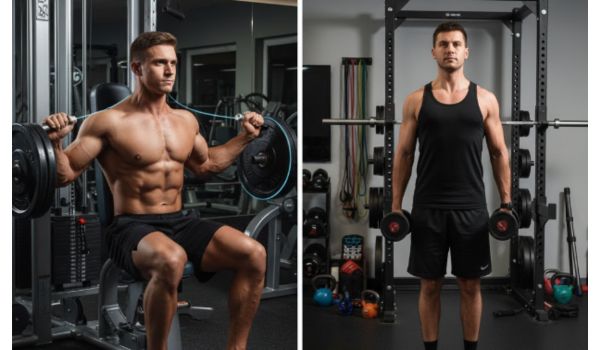
Determining if a lateral raise machine is right for you boils down to your goals, space, and budget. For specific groups, this deltoid machine is a non-negotiable asset.
Perfect For
The lateral raise machine is absolutely Perfect For elite Bodybuilders and those high-volume trainers who prioritize muscle aesthetics above all else. Its stable, low-stress isolation makes it invaluable for those undergoing shoulder injury rehabilitation who need controlled movement. It is the ideal tool for anyone whose primary objective is achieving total fatigue in the medial deltoid safely. If you demand perfect consistency and want to master lateral raise form without momentum, this is your choice.
Not Ideal For
Conversely, the lateral raise machine is Not Ideal For certain groups. This includes beginners who need to develop foundational stability through functional movement. It is also not practical for budget-conscious buyers or those with very limited space. If you only have room for one main piece of equipment and need maximum versatility, your money is better spent elsewhere. You should stick with dumbbell lateral raises or a cable lateral raise comparison to see what suits your space best.
Conclusion: Final Verdict on the Lateral Raise Machine
The lateral raise machine is a highly effective, specialized piece of strength training equipment offering unique benefits like superior isolation and joint-friendly movement. It is the best machine for side deltoids when budget and space are not constraints. However, for the average home gym owner, the sheer cost and space constraints make it impractical. Therefore, the savvy solution often lies in versatile shoulder attachments like the Shoulder Boulder Attachment. The investment in a piece of equipment like the HAMMER STRENGTH SELECT LATERAL RAISE is only truly warranted if you operate a commercial gym or if developing world-class capped shoulders is your singular training priority.
FAQ
Is the lateral raise machine any good?
Yes, it is excellent for achieving maximum targeted shoulder isolation and is considered the best machine for side deltoids.
How to do lateral raise machine correctly?
Adjust the seat so your shoulder joint aligns with the axis of rotation then focus on pushing your elbows out and up smoothly.
Which is better, a machine lateral raise or a dumbbell?
The machine is generally better for isolation and Progressive Overload technique on machines while the dumbbell is better for functional stability.
Is the lateral raise machine safe?
Yes, the fixed path of motion makes it a very joint-friendly movement for shoulders and ideal for shoulder injury rehabilitation.
Why was the overhead press banned?
The overhead press was never universally banned, but some powerlifting federations excluded the strict press from competition to focus on the press-out bench press.
Is 20 lb lateral raise good?
If you maintain perfect form and achieve muscle fatigue between 8-15 repetitions, 20 lbs is a very respectable weight.

Muddasir Tahir is the founder and lead researcher at Lifestyle Dominates. With a strong passion for fitness and self-improvement, Muddasir spends his time studying human movement and high-performance habits.
His goal is to provide informational topics that are easy to understand and backed by careful research. Muddasir believes that everyone has the power to improve their lifestyle by mastering the right techniques.
When he isn’t researching new ways to help people dominate their lives, he is dedicated to building a community of like-minded individuals who strive for strength and a better mindset every day.
Woah! I’m really enjoying the template/theme of this website.
It’s simple, yet effective. A lot of times it’s very hard to get that “perfect balance” between user friendliness
and visual appeal. I must say you have done a fantastic job with this.
Additionally, the blog loads super fast for me on Firefox.
Outstanding Blog!