

If you are tired of the treadmill’s monotonous pounding or the stationary bike’s specialized fatigue, you are likely wondering: is rowing a good workout for your specific goals? The short answer is yes; it is perhaps the most efficient, time-saving, and comprehensive exercise available today.
By engaging nearly every major muscle group simultaneously, an indoor rower (ergometer) delivers high-intensity results without the high-impact stress on your skeletal system. Whether you are returning to fitness after a long hiatus or seeking a competitive edge, this machine offers a rare blend of low-impact cardio and legitimate resistance training.
Is Rowing a Good Workout for Everyone? (The Expert Verdict)
I have spent fifteen years testing every fitness fad that has crossed the Atlantic, yet I always return to the rower. It is the Swiss Army knife of the gym because it scales with you; the machine only gives back what you pull into it. For the corporate warrior or the busy parent, is rowing a good workout? It is arguably the best because it respects your limited time while demanding total-body accountability.
While some worry it is too technical, I have found that even a novice can find their rhythm within a single session. It is an inclusive tool that bridges the gap between rehabilitation and elite performance. If you are looking for a singular habit to transform your body composition, this is the undisputed heavyweight champion of the fitness floor.
Why Rowing is the Best Choice for Beginners After a Break
Most people fail their “comeback” because they choose high-impact sports that lead to immediate injury. Because rowing is a joint-friendly exercise, it allows you to build a massive aerobic capacity without the shin splints or knee inflammation associated with running. It is the ultimate “ego-free” start for anyone who has been away from the gym for a while.
The 86% Rule: How One Stroke Activates Every Major Muscle Group
Unlike cycling, which is heavily leg-dominant, the 86% muscle engagement (specifically the AFPA statistic) proves that rowing is a total-body workout. Each stroke utilizes your quads, glutes, core, and lats in a synchronized symphony of movement. You aren’t just burning calories; you are refining your functional fitness movements with every single slide of the seat.
Low-Impact vs. High-Intensity: Balancing Joint Safety and Calorie Burn
The magic of the rower lies in its ability to provide high-intensity interval training (HIIT) while remaining remarkably gentle on the cartilage. You can push your heart rate into the red zone without the bone-jarring impact of a sprint. This balance makes it a sustainable lifelong tool for maintaining cardiovascular system efficiency without wearing out your biological tires.
Science-Backed Health Benefits of Indoor Rowing
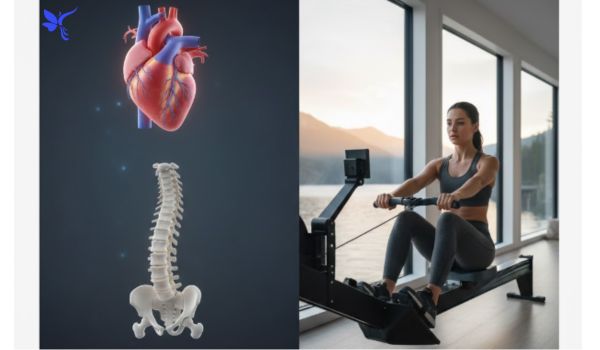
Modern research suggests that the rhythmic nature of rowing does more than just melt fat; it recalibrates your internal systems. When people ask me, is rowing a good workout for longevity, I point toward its unique ability to improve VO2 max improvement markers. It forces the heart to pump blood to both the upper and lower extremities simultaneously, which is a massive metabolic challenge.
Beyond the internal engine, rowing acts as a corrective tool for our modern, sedentary lifestyles. Modern life keeps us slumped over our devices, yet the act of rowing requires a powerful posterior chain activation to keep you upright. This constant pulling motion balances the “push-heavy” nature of our daily lives, making it a functional necessity rather than just a cosmetic choice.
Cardiovascular Health: Building a Stronger Heart and Lungs
Consistent sessions on the rower lead to a significant metabolic rate acceleration and a more resilient heart. By challenging both your aerobic and anaerobic systems, you improve your lactic acid threshold, allowing you to work harder for longer. It is the most effective way to strengthen the pump that keeps your entire system thriving.
Posture Correction: Reversing the Effects of “Desk Neck”
Rowing is the ultimate antidote to the “slump” because it requires constant core stability to maintain a neutral spine. The movement strengthens the rhomboids and trapezius, pulling your shoulders back into their natural, confident alignment. You will find yourself standing taller and breathing more deeply after just a few weeks of focused practice.
Bone Density and Joint Health: A Weight-Bearing Alternative
While it is low-impact, the resistance provided by the water or air fan contributes to osteoporosis prevention (bone density). The tension placed on the bones through the tendons encourages mineralization without the trauma of gravity-heavy sports. This makes it a vital active recovery sessions tool or a primary sport for aging athletes.
Rowing for Weight Loss and Body Transformation
If your primary goal is shedding weight, you must understand that not all calories burned are created equal. When considering is rowing a good workout for fat loss, the secret weapon is post-exercise oxygen consumption (EPOC). Because you are using so much muscle mass, your body continues to burn fuel at a higher rate long after you have stepped off the machine.
| Activity (30 Mins) | Average Calories Burned | Impact Level | Primary Focus |
| Indoor Rowing | 300 – 450 | Low | Total Body |
| Running (6 mph) | 300 – 350 | High | Lower Body |
| Road Cycling | 250 – 320 | Low | Lower Body |
Calorie Burn Comparison: Rowing vs. Running vs. Cycling
As shown above, the calorie burn per hour on a rower often exceeds other forms of steady-state cardio. Because you are engaging in concentric and eccentric movements across your entire frame, the energy demand is simply higher. You get more “bang for your buck” in a thirty-minute window than almost any other machine in the facility.
The HIIT Effect: Using the Rower for Maximum Fat Oxidation
The rower is the perfect vessel for intervals that push your biometrics and heart rate zones to their limits. By alternating between power 10s and recovery glides, you trigger a hormonal response that favors fat oxidation. This variety keeps the workout mentally engaging while forcing your body to adapt to rapid changes in intensity.
Toning and Hypertrophy: Can You Build Muscle on a Rower?
While it won’t replace heavy deadlifts, the constant muscular endurance required builds a lean, athletic physique. The resistance mimics a high-rep weightlifting session, providing enough stimulus for “toning” and subtle muscle growth. It is the reason rowers are famously known for their broad shoulders and powerful, well-defined legs.
Mental Health and Cognitive Advantages of Rowing
We often focus on the physical, but the mental clarity I find on the water or the erg is unparalleled. So, is rowing a good workout for the mind? Absolutely; the repetitive, tactile nature of the stroke creates a “meditation in motion.” It forces you to focus on the present, matching your breath to your movement in a way that silences the noise of the outside world.
There is also a biological component to this “rower’s high” that goes beyond simple sweat. The sustained effort required to maintain a specific stroke rate (SPM) triggers a chemical cascade in the brain. This isn’t just a workout; it is a neurological reset that leaves you feeling more capable of handling life’s stressors.
Want to dive deeper into mindfulness? See How to Get Better at Yoga for mental clarity.
The “Flow State”: Meditative Rhythms and Stress Reduction
There is a specific cadence to rowing that induces a flow state, where time seems to vanish. This rhythmic consistency lowers cortisol levels and provides a much-needed break from the digital overstimulation of 2026. It is a rare opportunity to disconnect from the “grid” and reconnect with your own physical rhythm.
Endorphins and Beyond: How Rowing Combats Anxiety and Depression
The intense physical exertion leads to a massive endorphin release, which acts as a natural mood lifter. Unlike the “crash” associated with caffeine or sugar, this exercise-induced euphoria is stable and long-lasting. It provides a sense of accomplishment that can be a powerful ally in managing daily anxiety or persistent low moods.
Cognitive Longevity: Aerobic Exercise and Hippocampal Volume
Recent studies suggest that the oxygenation provided by rowing supports cognitive longevity: aerobic exercise and hippocampal volume. By increasing blood flow to the brain, you are essentially “watering” the areas responsible for memory and learning. It is a proactive investment in your future self, ensuring your mind stays as sharp as your body.
How to Start (or Restart) Your Rowing Journey Safely
The biggest mistake I see beginners make is treating the rower like a “pulling” machine for the arms. In reality, rowing is a “pushing” sport. When asking is rowing a good workout, the answer only stays “yes” if your technique is sound. I always tell my clients to follow my 3-2-1 rule: 3 parts legs, 2 parts core, 1 part arms.
Proper ergonomics of the rowing machine start with understanding that your legs are the engine, not your biceps. If you find your lower back aching, you are likely “opening” your torso too early. Focus on the sequence, and the power will follow naturally without the risk of repetitive strain or injury.
Mastering the Four Phases: Catch, Drive, Finish, and Recovery
Success on the rower depends on mastering the hip hinge mechanics during the transition between the catch and the drive. The drive should be an explosive push with the legs, while the recovery should be a slow, controlled slide back to the start. Think of it as a coiled spring releasing and then slowly resetting for the next strike.
The Beginner’s 20-Minute Protocol: A Week-by-Week Plan
I recommend starting with three sessions a week, focusing entirely on form rather than speed. Spend the first ten minutes at a comfortable pace, then try to maintain a consistent split time for the final ten. This builds a foundation of movement quality that will allow you to transition into more intense fitness level adaptability later.
Common Mistakes to Avoid to Prevent Lower Back Pain
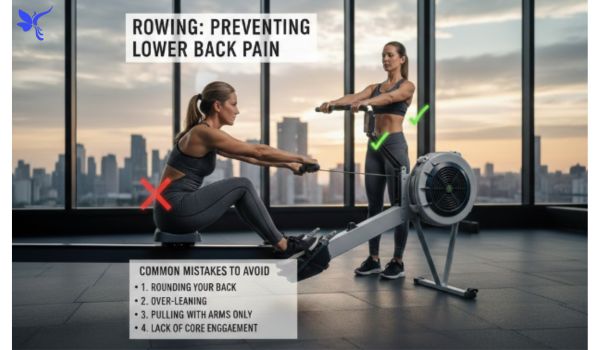
Most injuries occur when the user loses their hip hinge mechanics and rounds their spine under tension. Keep your chest up and your core braced as if you were preparing for a heavy squat. By keeping the tension in your glutes and hamstrings rather than your lumbar spine, you ensure the workout remains productive and safe.
Comparing the Best Home Rowing Machines (Buyer’s Guide)
Deciding to bring a rower into your home is a commitment to your long-term health, but the market is flooded with options. From the classic “whoosh” of an air rower to the silent glide of magnetic resistance, the choice depends on your environment. I personally prefer the dynamic feel of air, but your neighbors might appreciate a quieter alternative.
Air vs. Water vs. Magnetic Resistance: Which is Right for You?
Air rowers are the industry standard for a reason; the resistance is infinite and perfectly mimics the feel of a boat. Water rowers offer a beautiful aesthetic and a soothing sound, while magnetic options provide the quietest experience for apartment living. Each has its merits, but they all facilitate the same metabolic rate acceleration if used correctly.
Space-Saving Solutions: Best Foldable Rowers for Small Apartments
In 2026, you don’t need a sprawling home gym to reap the benefits of a cross-training for runners favorite. Many top-tier machines now offer vertical storage or folding frames that take up no more space than a dining room chair. This accessibility means that “no room” is no longer a valid excuse for skipping your daily row.
Conclusion
So, is rowing a good workout? It is more than just a workout; it is a comprehensive system for physical and mental mastery. It challenges your heart, preserves your joints, and sharpens your mind in a way few other activities can match. By respecting the technique and embracing the rhythm, you can unlock a level of fitness that is as sustainable as it is powerful.
FAQ
Is rowing a good workout?
Yes, it is a premier total-body workout that engages 86% of your muscles while providing high-calorie burn and low-impact cardio.
Is 20 minutes of rowing enough?
Absolutely; 20 minutes of high-intensity rowing can significantly improve VO2 max improvement and trigger metabolic rate acceleration.
Is rowing good for losing belly fat?
Yes, it creates a high caloric deficit and promotes post-exercise oxygen consumption (EPOC), which is essential for reducing visceral fat.
What are the downsides of rowing?
The primary downsides are a steep learning curve for proper form and the risk of lower back strain if hip hinge mechanics are ignored.
How much rowing equals 10,000 steps?
Approximately 40 to 50 minutes of steady rowing at a moderate stroke rate (SPM) is metabolically equivalent to walking 10,000 steps.
Is rowing better than a treadmill?
Rowing is often superior because it builds muscular endurance in the upper and lower body simultaneously with significantly less joint impact.

Muddasir Tahir is the founder and lead researcher at Lifestyle Dominates. With a strong passion for fitness and self-improvement, Muddasir spends his time studying human movement and high-performance habits.
His goal is to provide informational topics that are easy to understand and backed by careful research. Muddasir believes that everyone has the power to improve their lifestyle by mastering the right techniques.
When he isn’t researching new ways to help people dominate their lives, he is dedicated to building a community of like-minded individuals who strive for strength and a better mindset every day.
Excellent blog, Muddasir Tahir! Just finished reading—such a comprehensive and practical guide to rowing. The 86% muscle activation stat is incredible, and the calorie comparison table shows rowing beats running and cycling for total-body results. Love the emphasis on proper form (3-2-1 rule) to prevent injury and the mental health benefits like flow state and endorphin release. This is genuinely helpful for anyone considering rowing. Thank you for sharing! Keep writing more!
Thank you very much for reading and encouraging us in such way. We’ll keep sharing such helpful contents. Keep visiting our website.