

Unlocking peak athletic performance often feels like chasing an elusive target. You work hard but feel your rate of force production has hit a ceiling. While traditional weightlifting has its merits, a different kind of training can unlock untapped potential. We are talking about ballistic isometrics exercises, which fuse the explosive intent of ballistic movements with the static tension of isometric contractions. It is a dynamic approach to strength that can completely transform how your body generates power, making you faster and more formidable.
Medical Disclaimer
The information on Lifestyle Dominates is for informational and educational purposes only and is not intended as medical advice. Always consult with a Qualified Healthcare Professional or Certified Trainer before starting any new Exercise Program or addressing Muscle Pain
What Is Isometric Training?
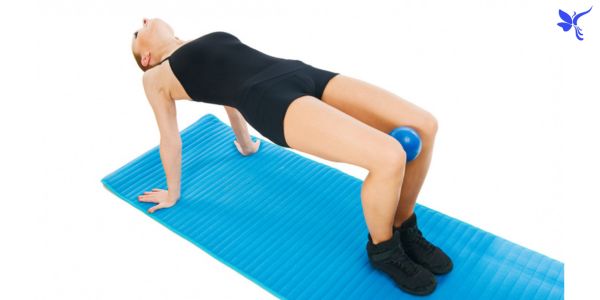
Imagine bracing yourself against a massive, unmovable object with every fiber of your being. You are generating force but not moving at all. That is the very essence of an isometric contraction, a powerful way to build strength. This is distinctly different from concentric or eccentric movements where your joints bend and straighten.
There are two main categories of isometrics that you should know about. Overcoming isometrics is about pushing against an immovable object. The legendary strongman Dennis Rogers used this to build his incredible strength. The other type is yielding isometrics, where you hold a position against a weight or force, like pausing during a squat.
Key Principles of Isometric Training
The effectiveness of isometric exercises is rooted in a few key principles. The repetition duration or the time you hold the contraction is critical. For maximal strength gains, a brief, intense hold of a few seconds is best. Your total training volume for an exercise must be carefully managed.
Proper intensity is the heart of every great isometric effort. You must try to exert near-maximal effort. Also, the muscle length or the specific joint angles you train at will determine your results. Strength gained at one angle does not fully carry over to another so you should train a variety of positions.
The Role of Intent and Muscle Activation
The secret ingredient in all great strength training is your intent. When you perform an isometric contraction, you must focus on pushing as hard as possible. This deliberate focus sends a strong neural drive to your muscles. It trains your body to activate more motor units than you would in a typical workout.
This conscious effort against an immovable force is a game changer for strength gains. You teach your brain to use a higher percentage of available muscle fibers. This enhanced muscle recruitment patterns is the very definition of a stronger nervous system. Engage every muscle as you push against an unyielding force, and you’ll see why ballistic isometrics exercises are so powerful.
Types of Isometric Exercises
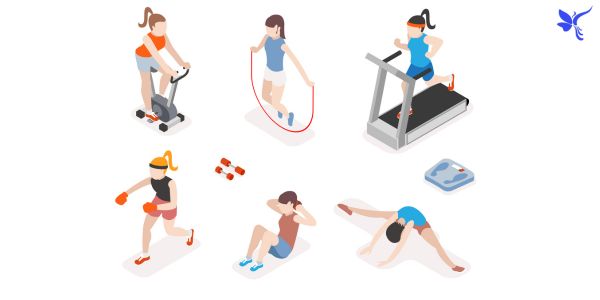
Isometric exercises are incredibly versatile. They can be broken down into various types based on the equipment you use or the style of the contraction. The common plank is a basic yet excellent example of a yielding isometric. You can perform a multitude of beneficial exercises with no gear.
You can perform simple isometrics anywhere you are. Consider a simple press of your palms together or pushing your feet down into the ground. These basic movements are a great way to start with contractions without movement. These can improve your mind-muscle connection and build a foundation of low technical requirement strength for future progress.
Programming Isometrics into Your Training
Knowing how to program isometrics is like holding the master key to your training. You must carefully consider rest times between sets for optimal recovery. Short, high-intensity holds need more time to allow your nervous system to recuperate. The simplest way is to add them before your main lifts as a warmup.
Using isometric training you can easily develop different qualities. A linear model progression might move from high duration to short duration holds for a strength block. For athletes needing multiple qualities, an undulated model might be a better choice. The key is to match the exercise to your specific training goals.
Here is an example of a weekly strength block using a linear model:
| Method | Sets | Reps | Rep Time (s) | Intensity |
| Grinding Overcoming | 3 | 5 | 6 | 75% MVIC |
| Grinding Overcoming | 3 | 4 | 5 | 85% MVIC |
| Grinding Overcoming | 3 | 3 | 4 | 95% MVIC |
Advanced Isometric Training Techniques

Once you have mastered the basics you can start exploring some advanced techniques. The realm of advanced isometrics includes more complex methods and applications. This is where you can explore the explosive nature of Ballistic Isometrics Exercises or the fine control of quasi isometrics.
Quasi isometrics are at the opposite end of the spectrum from ballistic movements. They require you to move through an entire range of motion as slowly as possible. This is not easy and demands immense muscle control. This advanced method is excellent for fixing technique flaws and building continuous muscle recruitment patterns throughout a movement.
Unveiling Ballistic Isometrics Exercises
Ballistic Isometrics Exercises are all about explosive rate of force production. Instead of a slow squeeze, you “explode” into the contraction as fast as possible. This style of explosive isometrics specifically trains your nervous system to fire more rapidly. It can significantly boost your starting strength. For example, a track athlete might use a Ballistic Isometrics Exercise from the starting blocks to improve their acceleration.
Isometric Training for Post-Activation Potentiation (PAP)
Post-activation potentiation is a powerful physiological response where a maximal contraction primes the nervous system. The result is a temporary boost in performance for subsequent power movements. Isometrics are an ideal tool for activating this phenomenon. A brief isometric mid-thigh pull can prime an athlete for a powerful jump or sprint.
This technique is used by many elite athletes. A quick, intense isometric hold can instantly enhance your sprint performance and jumping ability. It is a fantastic way to prepare your body for max velocity efforts. The boost in neural drive allows for more forceful and faster muscle contractions when it counts.
Isometrics for Testing and Assessment
Isometrics are not just for training but also for objective testing and assessment. They provide highly reliable and consistent data. Using a force plate or a dynamometer you can precisely measure your peak force. This takes the guesswork out of your training.
By looking at data points like force at 100ms and asymmetries between limbs, you can pinpoint weaknesses. An athlete with a large left-right asymmetry might need more unilateral variations. This data-driven approach helps you target your weakest link.
Integrating Isometrics into a Return-to-Play Protocol
For athletes recovering from an injury, a rehab protocol often starts with isometrics. The low-impact nature of contractions without movement is perfect for rebuilding strength without causing further damage. This makes isometrics a cornerstone of any effective rehabilitation plan.
A carefully managed phased return to activity is essential. Isometrics can be used throughout the process to restore function and confidence. This methodical plan guarantees safe and steady advancement for the athlete. A well-designed rehab protocol will start with gentle holds and build up to explosive movements.
The Phased Approach to Recovery
The journey to return to play from a serious injury like an ACL tear is a long one. The ACL rehab process can be divided into specific phases. Isometrics are a vital part of each stage, helping to maintain muscle control and address any neural inhibitions. This careful progression minimizes re-injury risk and gets the athlete back to their sport stronger than before.
Isometric Training as an Assistance Exercise
You can use isometrics to strengthen specific parts of your lifts. This is incredibly valuable for powerlifters who are struggling with a sticking point. A brief overcoming isometric at your weakest point can drastically increase your strength gains in that position.
For instance, if you struggle at the bottom of your squat, you can perform an isometric hold against pins at that exact depth. This trains your body to generate maximum force where you need it most. This supplemental work can make a huge difference in your strength block and overall performance.
Benefits of Isometric Training for Combat Sports

Combat athletes like those in boxing and MMA can greatly benefit from isometrics. A good plan for these athletes is to be both powerfully strong and quick. Isometrics build the foundational strength needed for grappling and the quick rate of force production for strikes.
Ballistic Isometrics Exercises help develop explosive isometrics for punches and kicks. These workouts can also improve a fighter’s stability in clinches and scrambles. The static holds build resilience and prepare the body for the unique demands of combat.
Conclusion
Isometric strength training is a truly powerful tool. From basic holds to advanced Ballistic Isometrics Exercises, its versatility is unmatched. This method can unlock new levels of power and strength. Embrace the practice of being still to become more explosive than ever before.
FAQ
What are ballistic isometrics?
Ballistic isometrics are a training method where you apply maximum rate of force production against an immovable object. The goal is to contract your muscles as quickly and powerfully as possible.
What are examples of isometric exercises?
Examples of isometric exercises include a wall sit, a plank, or pushing against a door frame. These movements involve holding a static position without movement.
Do isometrics really build muscle?
Yes, isometrics can build muscle, especially when performed with high intensity and sufficient training volume. They are highly effective for increasing strength at specific joint angles.
Did Bruce Lee do isometrics every day?
Bruce Lee was a proponent of isometric training and incorporated it into his routine, but it is unlikely he did them every single day. He used them to build a high level of muscle recruitment patterns.
What are the ballistic 6 exercises?
There is no standard set of “ballistic 6 exercises.” The term likely refers to a specific program or a misunderstanding of Ballistic Isometrics Exercises, which can be applied to any muscle group.
Do isometrics build explosive strength?
Yes, isometrics can build explosive strength, particularly when you apply the principles of Ballistic Isometrics Exercises. They improve your nervous system adaptation and ability to generate force quickly.

Muddasir Tahir is the founder and lead researcher at Lifestyle Dominates. With a strong passion for fitness and self-improvement, Muddasir spends his time studying human movement and high-performance habits.
His goal is to provide informational topics that are easy to understand and backed by careful research. Muddasir believes that everyone has the power to improve their lifestyle by mastering the right techniques.
When he isn’t researching new ways to help people dominate their lives, he is dedicated to building a community of like-minded individuals who strive for strength and a better mindset every day.