

Are you constantly battling persistent side body stiffness or that frustrating pull during twisting movements? That discomfort is likely signaling neglected oblique muscles, crucial for your core’s stability and power. An effective abdominal oblique stretch is essential for addressing these issues, moving beyond generalized routines to unlock genuine Lateral flexion and Trunk rotation.
By committing to just a few minutes of targeted lengthening, you can significantly reduce Chronic Hip and Glute Pain and greatly improve your Spinal Health. This guide reveals how to target both the Internal Obliques and External Obliques for comprehensive, lasting relief.
What is an Abdominal Oblique Stretch?
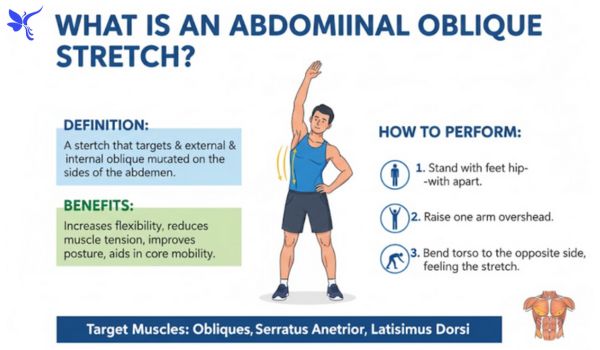
Have you ever experienced a sudden, sharp tightness along your flank when reaching or twisting awkwardly? This nagging sensation is your side body stiffness calling for attention. An abdominal oblique stretch is specifically a restorative movement designed to lengthen the muscles running diagonally across your torso. It targets the core’s often-forgotten lateral tissues. This targeted lengthening helps unlock full range of motion, counteracting muscular imbalances built up from our modern, sedentary habits.
This focused release is far more than just a typical side bend. It promotes holistic Spinal Health and contributes significantly to overall Core stabilization. When you successfully perform an effective oblique stretch, you are granting your torso the freedom to twist and bend without restriction or discomfort. This one simple action can be a game-changer for your posture and athletic endeavors.
Why Abdominal Oblique Stretch is Essential for a Strong, Flexible Core
The obliques, or abdominal oblique muscles, are a vital part of your core musculature, playing a crucial role in rotational movement, side-bending, and stabilizing your spine. Neglecting oblique flexibility can lead to stiffness, poor posture, and increased risk of lower back pain. Incorporating targeted abdominal oblique stretch into your routine is the key to unlocking better flexibility, core strength, and overall movement quality.
Benefits Beyond Flexibility
Regular practice of abdominal oblique stretch offers significant benefits beyond just muscle lengthening:
- Relieves Lower Back Pain: By releasing tension in the often-tight obliques and surrounding core muscles, pressure is taken off the lower back.
- Improves Posture: Strong and flexible obliques support a neutral spine alignment, helping you stand and sit taller.
- Enhances Rotational Movement: Flexibility in the obliques is crucial for sports and activities that involve twisting, such as golf, tennis, and running.
- Aids Digestion: Gentle compression and decompression of the abdominal area during stretches can sometimes stimulate digestive function.
Incorporating Abdominal Oblique Stretch into Your Routine
For optimal results, aim to perform abdominal oblique stretch 3-5 times per week, ideally after your workouts or before bed. Consistency is more important than intensity. Focus on achieving a noticeable, gentle stretch without bouncing or forcing the movement.
Understanding the Oblique Muscles: Anatomy and Function
These extraordinary muscles are the unsung champions of your trunk rotation and stability. The obliques form a crucial, interwoven part of the abdominal wall, operating like a muscular support system to safeguard your internal organs and spine. They are fundamental in enabling powerful rotational movements used in sports like tennis or baseball, and are essential for controlled Lateral flexion. Knowing these complex structures is the first vital step to mastering how to stretch obliques correctly.
Truly understanding the architecture of these muscles empowers you to achieve Targeted oblique relief. The core is not just the “six-pack” area, the Rectus Abdominis, but a sophisticated structure involving deeper layers like the Transverse Abdominis and, critically, the paired Internal Obliques and External Obliques. Treating these muscles with intentional stretching is not an option; it is a necessity for preventing injury and maintaining an upright, pain-free life.
The Core Difference: External Oblique Stretch vs. Internal Oblique Stretch
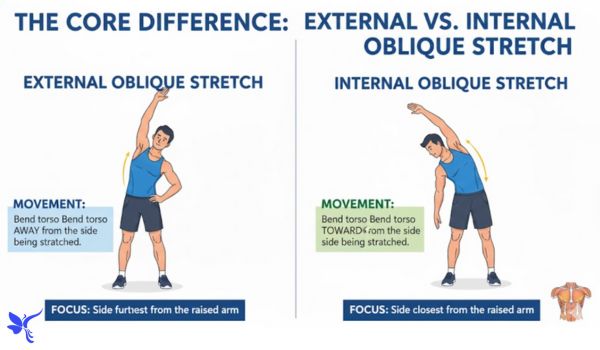
The oblique muscles are distinct, opposing layers, working together like two gears turning your torso. The External Obliques are the more superficial muscles, running in a downward and forward direction, similar to putting your hands in your pockets. Conversely, the Internal Obliques lie beneath the external layer, running upward and forward. Achieving a true abdominal oblique stretch requires careful integration of both side-bending and controlled Trunk rotation to isolate these distinct Origin and Insertion Points and ensure comprehensive lengthening.
| Oblique Muscle | Location | Primary Action in Stretch |
| External Obliques | Superficial, outer layer of the abdomen. | Lateral Flexion (Bending to the side). |
| Internal Obliques | Deep, beneath the external layer. | Incorporating Rotation with side bend for deeper release. |
Key Functions of the Oblique Muscles
The obliques are central to keeping your torso resilient. Their primary job is Spinal Stabilization and Support, effectively working to prevent excessive extension or harmful rotation of your vertebral column. Moreover, the obliques play an unexpected yet crucial Role in Breathing, acting as Accessory respiratory muscles that help forcibly exhale air. This connection means stretching them can directly improve your Breath capacity. Ultimately, their balanced strength and flexibility are paramount to your effortless Contribution to Good Posture.
The Oblique-Core Connection: QL and Transverse Abdominis Partnership
When we discuss core health, we must consider the partnership between the oblique muscles and the deep stabilizing muscle of the low back, the Quadratus Lumborum (QL). The QL often tightens up and becomes responsible for Chronic Hip and Glute Pain when the surrounding core is insufficient. A lack of Core stabilization from the obliques forces the QL to overwork, leading directly to excruciating lower back pain. Regular abdominal oblique stretch routines help offload the burden on the QL by restoring function to the entire Anterior oblique sling stretch system.
Why You Need an Oblique Stretch Routine
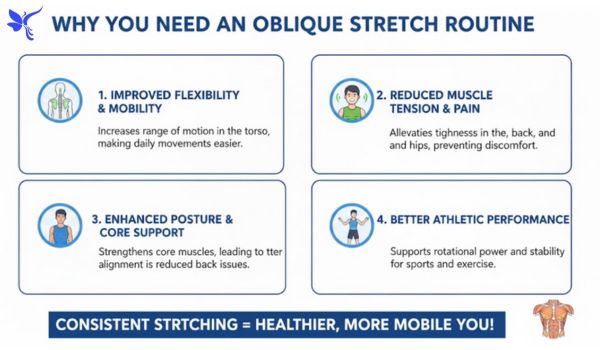
You absolutely need a dedicated oblique stretch routine because an oblique stretch is essentially preventative maintenance for your entire torso. Ignoring this area is like driving a car with one flat tire; other parts must overcompensate, leading to eventual breakdown. The stiffness and lack of Thoracic spine mobility caused by tight obliques can severely limit your ability to move freely and powerfully.
Implementing a regular routine moves beyond merely fixing pain; it is a proactive strategy for Enhanced Athletic Performance. When your obliques are mobile, your ability to generate force and change direction improves exponentially. This commitment to flexibility ensures you are always prepared to move efficiently and effectively in sports and in daily life.
Common Causes of Tight Obliques
Muscle tightness in the side body is rarely accidental; it is usually a result of consistent functional stress. Overuse and Repetitive Motion, common in activities such as golf, tennis, or even certain manual labor jobs, can cause the obliques to seize up. Furthermore, Poor Posture, particularly the chronic slumping or lateral leaning prevalent during prolonged sitting, instructs these muscles to remain shortened. However, a less understood cause is Compensatory Tightness where underlying Muscle weakness in the Hip flexors or lower back forces the obliques to chronically contract. This chronic tension can quickly devolve into an Oblique Strain or painful Side Strain.
The Benefits of Regular Obliques Stretching Exercises
The therapeutic payoff from regular oblique stretches is substantial. Consistent stretching is key to Relieving Lower Back Pain and dramatically improving your Spinal Health. By lengthening these tissues, you unlock an Increased Range of Motion for Twisting and Bending, which translates directly into safer, more fluid movement. Furthermore, the decompression of the ribs and torso facilitates Improved Breath Capacity by aiding the accessory respiratory muscles. This combination of mobility and function leads directly to a quantifiable improvement in Enhanced Athletic Performance.
Is Oblique Stretching Different from General Abdominal Stretching?
Absolutely. While a general abdominal stretch often focuses on lengthening the central Rectus Abdominis (think of a cobra pose), an abdominal oblique stretch is specifically oriented toward the Lateral flexion and rotation muscles located on the sides. There is a clear Distinction in muscle targets; one focuses on the “six-pack” area, while the other addresses the side body. Knowing How to stretch abs and obliques separately allows you to precisely target relief. For example, When a side bend is better than a simple back extension is when you need to specifically release the Latissimus Dorsi and the obliques that contribute to side body stiffness.
Top Oblique Stretch Exercises for Maximum Relief
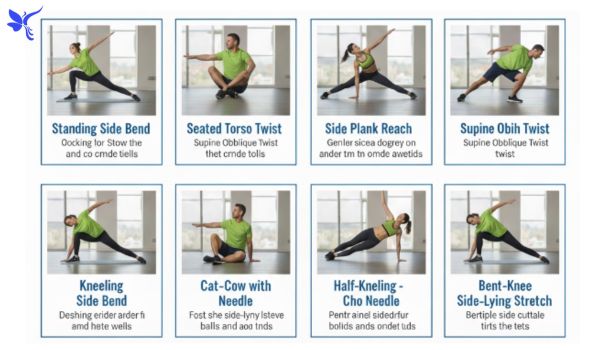
Getting the maximum benefit from these movements means understanding that different positions target the obliques in different ways.
| Stretch Category | Intensity Level | Primary Benefit |
| Standing Stretches | Low (Dynamic/Quick) | Flexibility & Mobility, Daily stretching benefits |
| Seated/Kneeling Stretches | Medium (Static/Deeper) | Targeted oblique relief, Thoracic spine mobility |
| Supine/Side-Lying Stretches | High (Deep/Relaxation) | Relieving Lower Back Pain, Deep Myofascial release |
Standing Oblique Stretches (Quick & Anytime)
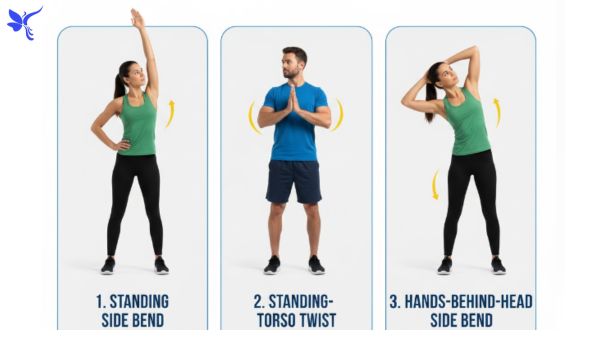
These simple movements are perfect for quick Office stretches for obliques or a dynamic warm-up before exercise. The Standing Side Bend (often called the Oblique Overhead Stretch) is the most accessible stretch oblique muscles movement, opening the rib cage with minimal effort. You can amplify the stretch by trying the Standing Lateral Stretch, a unique variation where crossing one leg behind the other creates a noticeably deeper pull in the side body. Finally, the Standing Torso Twist acts as a gentle, Dynamic Stretching Oblique routines precursor to any core activity.
Seated & Kneeling Oblique Stretches (Deeper Focus)
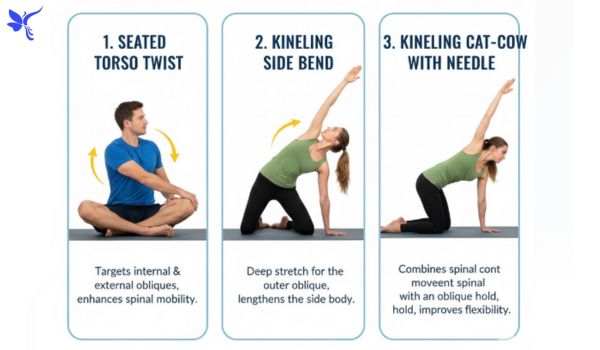
When you have a few minutes for stillness, these seated and kneeling variations offer profound, deep relief. The Seated Oblique Stretch can be performed either cross-legged or in a chair for a sustained pull. A more intense option is the Mermaid Stretch, a beautiful, deep, side abdominal oblique stretch often utilized in Pilates and yoga for focused Lateral flexion. To conclude, the Revolved Child’s Pose provides a gentle, rotational oblique stretch that pairs well with deep Diaphragmatic breathing for maximum relaxation.
Supine & Side-Lying Oblique Stretches (Relaxation & Deep Relief)
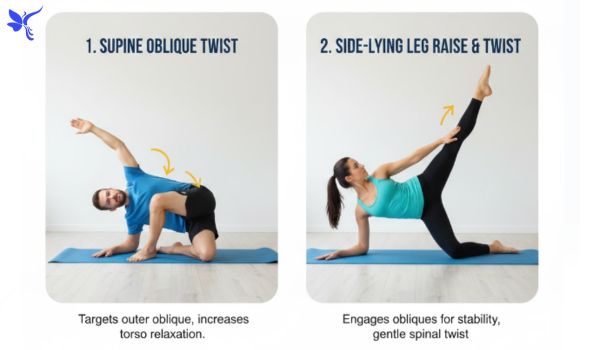
These prone positions are ideal for cooling down or for achieving maximum length and relaxation. The Knees to One Side position, also known as a Supine Spinal Twist, is exceptionally effective as an oblique stretch for the lower portions of the abdominal wall. To target the deep lateral line, try the Side-Lying Overhead Reach, aiming to create as much distance between your fingers and toes as possible. Lastly, Thread the Needle is a powerful asymmetrical stretch that simultaneously targets the obliques and improves Thoracic spine mobility.
Advanced Techniques and Dynamic Stretches
For those seeking to maximize Advanced oblique mobility or prepare for intense activity, these techniques are essential. The Doorway Oblique Stretch uses fixed support to leverage the stretch for high intensity, offering a unique sensation the competitors missed. The Side Plank Rotation is an excellent example of a Dynamic activation and stretch that improves core control. Finally, the Russian Twist Stretch serves not as a strength exercise here, but as a Dynamic mobility exercise to increase fluidity in your Trunk rotation.
Advanced Strategies for Targeted Oblique Stretch
The key to achieving the title of Best oblique stretches for lower back pain is knowing how to isolate the tissues.
Techniques to Emphasize the External Oblique Stretch
To truly zero in on the superficial External Oblique Stretch, your focus must be on pure Lateral Bending with minimal rotation. Imagine yourself standing perfectly flat between two panes of glass. This limits the recruitment of the deeper rotational muscles. Always remember the crucial role of air: Using your breath to deepen the stretch on the opposite side is a Diaphragmatic breathing technique that increases intra-abdominal pressure and provides a powerful, natural stretch.
Techniques to Emphasize the Internal Oblique Stretch
To engage the deep Internal Oblique Stretch, you must introduce a rotational element. This means Incorporating Rotation along with the side bend (such as performing a slight downward twist during the peak of your Up and Down Bend). Furthermore, understanding The role of the pelvis in isolating the internal oblique muscle stretch is critical. Maintaining a neutral or slightly tucked pelvis during the rotation often provides a more intense pull on the deeper layers.
Myofascial Release Before Stretching Tight Obliques
For excessively tight tissues, the best path to flexibility follows a clear pattern: Massage → Stretch → Strengthen. This approach uses Myofascial release to prepare the tissue. Learning How to use a foam roller or lacrosse ball to release tension in the side body is a superior strategy. Applying pressure to the area near the Quadratus Lumborum (QL) with a Lacrosse ball QL release before attempting a Seated Oblique Stretch can significantly improve your depth and relief.
Stretches for Oblique Strain and Injury Prevention
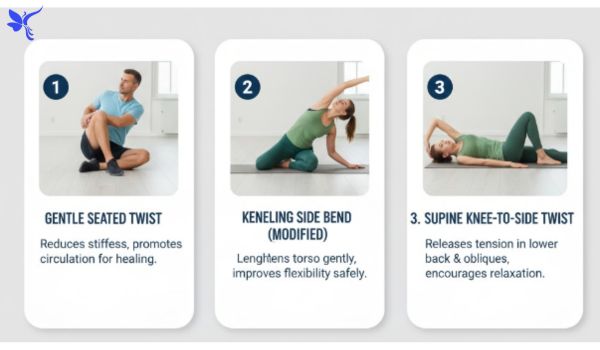
A high-authority article must cover safety. No one should attempt an abdominal oblique stretch when dealing with an Acute Injury.
Identifying an Oblique Strain (Side Strain)
An Oblique Strain or Side Strain is a common injury, often involving a sudden, sharp pain during forceful twisting or acceleration. Understanding Common symptoms and severity levels is paramount; a Grade 1 strain is mild, while a Grade 3 involves a full tear. Crucially, know When to rest and when to gently introduce movement. Immediately after an injury, R.I.C.E. is the rule, followed by professional medical consultation before attempting any Safe Strained Oblique Stretches.
Safe Strained Oblique Stretches (When cleared by a professional)
Once cleared, rehabilitation should begin with Gentle non-forceful movements, such as shallow Seated Side Bends performed only within a pain-free range. The primary goal is restoring circulation, not achieving depth. It is vital to prioritize Avoiding deep rotation and high tension (like PNF stretching), as these high-effort techniques can re-tear the healing muscle fibers. Recovery requires patience, consistency, and respect for the healing process.
Integrating Hip Oblique Stretches
The core and hips are inseparable. Oblique stretches for hip stability acknowledge the critical connection between hip stability (pelvic obliquity stretches) and core pain. Issues like Pelvic obliquity (uneven pelvis height) can cause chronic oblique tension. Therefore, incorporating Stretches that simultaneously address the obliques and hip flexors (like the anterior oblique sling stretch) is a uniquely comprehensive and superior strategy for long-term pain relief.
Tips for Stretching Success
Finalizing your routine with key strategies ensures you reap the maximum Daily stretching benefits.
Optimizing Your Oblique Stretching Routine
The secret weapon in any oblique stretch is your air control. You must Focus on Breathwork: Using diaphragmatic breathing to enhance muscle relaxation. This deep belly breathing calms the nervous system, allowing muscles to relax and lengthen further. Secondly, remember the timing: When to use Dynamic Stretching Oblique routines (warm-up) vs. Static Stretching (cool-down). Dynamic movements are best before activity, and static holds are reserved for recovery. Finally, Consistency—performing small, frequent oblique stretches is always better than one long, painful session per week.
Conclusion: Unlock Your Full Side Body Potential
You now possess the comprehensive knowledge to execute an effective abdominal oblique stretch routine. We have dissected the anatomy of the Internal Obliques and External Obliques, established the crucial connection to the Quadratus Lumborum (QL), and provided twelve top-tier movements for Targeted oblique relief. Implementing these strategies moves you far beyond simple flexibility; it is a commitment to robust Spinal Health and superior Core stabilization.
Don’t let side body stiffness or Muscular imbalances limit your movement or cause chronic lower back pain. Commit to just a few minutes of consistent oblique stretches daily. You will be amazed at the rapid improvement in your Breath capacity and overall Enhanced Athletic Performance. Your body deserves this profound freedom of motion.
FAQ
Do Oblique Stretches Help with Abs?
Yes, they help balance the entire abdominal wall, complementing the strength and flexibility of the Rectus Abdominis.
How to Stretch Abs and Obliques Simultaneously
Use movements like a gentle, controlled cobra pose or a Supine Spinal Twist that engages both the front and side of your core.
Can the Oblique Stretch During Early Pregnancy?
Gentle Seated Oblique Stretches are generally safe, but always consult your physician for approval and personalized modifications.
How to Stretch Abdominal Oblique Muscles?
Perform Lateral bending movements while sometimes incorporating a slight twist to target the diagonal fibers of the obliques effectively.
How Do You Release Tight Internal Obliques?
Focus on rotational movements paired with Lateral flexion, like the Revolved Child’s Pose, to access the deeper layer of tissue.
What Are the Symptoms of Tight Obliques?
Common symptoms include restricted Trunk rotation, pain when bending to the side, and referred lower back pain or Side body stiffness.
What Does a Pulled Oblique Feel Like?
It feels like a sudden, sharp, or tearing pain, known as an Oblique Strain, usually occurring during forceful rotation or twisting.
How Long Does It Take for a Tight Oblique to Heal?
Simple Muscle tightness can improve in days with stretching; a severe Oblique Strain may take 4 to 8 weeks, requiring rest first.
What Are the Trigger Points for Abdominal Obliques?
Trigger points are usually located along the lower rib cage and the front of the hip bone (iliac crest), often mirroring lower back pain.
What Does Tight Abdominal Fascia Feel Like?
It feels like a dull, restrictive girdling sensation around the midsection, limiting your ability to take a full, deep breath.

Muddasir Tahir is the founder and lead researcher at Lifestyle Dominates. With a strong passion for fitness and self-improvement, Muddasir spends his time studying human movement and high-performance habits.
His goal is to provide informational topics that are easy to understand and backed by careful research. Muddasir believes that everyone has the power to improve their lifestyle by mastering the right techniques.
When he isn’t researching new ways to help people dominate their lives, he is dedicated to building a community of like-minded individuals who strive for strength and a better mindset every day.
Good information. Lucky me I discovered your site
by chance (stumbleupon). I’ve saved as a favorite for later!
Thank You Very Much. Keep visiting site for more useful information.
Pretty nice post. I just stumbled upon your weblog
and wished to say that I’ve really enjoyed browsing your blog
posts. After all I will be subscribing to your rss feed and I hope you write again soon!
It felt nice hearing your words for us. We really apprecaite it and wish that you visit our blog again. Thank You.
Good post. I learn something new and challenging on websites I stumbleupon everyday.
It’s always exciting to read content from other writers and practice something from other web sites.
Definitely it is always useful reading other articles as we get to learn new things, thoughts and much more. It helps enhancing our knowledge and feel more confident in everyday life.
Thank you for visiting our blog.
Have a nive day!
Hi there just wanted to give you a quick heads
up and let you know a few of the pictures aren’t loading correctly.
I’m not sure why but I think its a linking issue.
I’ve tried it in two different internet browsers and both show the same outcome.
We’ll fix it soon
It’s awesome to go to see this website and reading the views
of all friends regarding this article, while I am also zealous of getting familiarity.
We are happy to see that you found this article helpful. Keep exploring our website for more helpful contents.
Pretty! This was an incredibly wonderful article. Many thanks for providing this information.
We are happy that you liked it. Keep exploring our website.