

If you are wondering exactly how many chest exercises per workout yield the best results, the optimal range is typically 2 to 4 exercises. This usually equates to 6 to 12 total sets per session. This precise volume stimulates growth without causing excessive fatigue or hindering your recovery.
I learned this the hard way after years of grinding through endless routines. Finding the perfect balance for how many chest exercises per workout changed my entire physique. Today, I am sharing my personal blueprint to help you optimize your time under the iron for maximum gains.
The Sweet Spot: How Many Exercises Are Actually Effective?
Nailing down the sweet spot for your routine requires looking at your specific goals. My personal 3-2-1 pec formula changed my life. I use three compound lifts, two isolation moves, and one burnout. This framework prevents mental exhaustion while maximizing overall muscle groups stimulation.
It is easy to assume more is always better. However, piling on extra work only sabotages your progress. You must tailor your approach based on what you are trying to achieve on the weight room floor. Let us break down the specifics.
For Muscle Growth (Hypertrophy)
To maximize Hypertrophy, aim for 3 to 4 distinct exercises. You want to trigger muscle protein synthesis effectively. Focus on hitting the Pectoralis major from multiple angles. This ensures optimal muscle fiber recruitment without crossing into the dangerous territory of overtraining.
For Maximum Strength
When focusing heavily on strength training goals, less is actually more. Stick to 1 or 2 primary heavy lifts. Your central nervous system needs massive energy for this. Prioritizing the classic Barbell bench press allows you to push maximum weight efficiently.
For Beginners vs. Advanced Lifters
Your experience heavily dictates your capacity. A beginner’s fitness level requires just 1 to 2 exercises to see rapid improvements. Conversely, advanced athletes might need 4 exercises to force adaptation. Remember to apply constant progressive overload regardless of your current stage.
Understanding Training Volume: Quality vs. Quantity
The concept of training volume is often misunderstood. It is not just about counting every single movement you perform. True quality comes from the intensity of your hard sets. It is always better to perform fewer, high-quality sets than endless mediocre ones.
You must track your workload meticulously. Deciding how many chest exercises per workout requires balancing effort with fatigue management. If you push too far beyond your capacity, you risk triggering severe overuse injuries that will sideline your progress for weeks.
Ideal Sets and Reps Per Session
For optimal results, aim for 3 to 4 sets per exercise. Your chosen rep range should align with your goals, usually 8 to 12 reps for size. Always gauge your effort using RPE (Rate of Perceived Exertion) to ensure adequate intensity.
Total Weekly Chest Sets for Optimal Gains
Research indicates that 10 to 20 total weekly sets is the golden standard for most lifters. You should divide this volume across your training days. Managing this correctly ensures sufficient recovery time between your heavy lifting sessions for continuous growth.
The Law of Diminishing Returns: Why More Isn’t Always Better
Adding an endless array of movements eventually hurts your progress. This principle reflects the diminishing returns effect clearly. Once you fully stimulate the muscle, extra work provides zero additional benefits. You are just digging a deeper recovery hole for yourself.
Your body has finite resources for repair. If you constantly wonder how many chest exercises per workout to add, you are asking the wrong question. Focus entirely on the execution and intensity of the core lifts instead of adding useless fluff.
Junk volume and Recovery Capacity
Junk volume consists of sets that create fatigue without stimulating any new growth. This directly impedes your recovery capacity. Avoid taking every single set to absolute failure training, as this severely taxes your nervous system and ruins your upcoming workouts.
How to Structure Your Chest Workout

Building the perfect routine is like constructing a house. Build a solid foundation before you start adding the extra details. I always prioritize heavy resistance training early in the session. This guarantees your energy is spent where it truly matters most.
Structure dictates success in the gym. If you blindly bounce between machines, you will stall out. A logical flow ensures you hit both the heavy power movements and the precise, targeted isolation work for complete muscular development.
Primary Compound movements (The Foundation)
Start your session with heavy Compound movements while you are fresh. Exercises like the Incline dumbbell press or standard bench press should be your absolute priority. These heavy hitters recruit the most muscle mass and drive the biggest hormonal response.
Secondary & Tertiary Exercises (Isolation exercises and Finishers)
After the heavy lifting, transition to Isolation exercises. Movements like Dumbbell flyes or the Machine chest press are perfect here. Focus heavily on stretching the muscle under tension and achieving a full range of motion to pump blood into the tissue.
Targeting Every Angle: Upper, Mid, and Lower Chest
A well-rounded chest requires hitting all specific areas. You must target the upper Clavicular head and the mid-to-lower Sternal heads evenly. Incorporate exercises focusing on downward shoulder adduction like high-to-low cables to fully develop that aesthetic, squared-off lower pec look.
Frequency vs. Intensity: Training Chest 1 vs. 2 Times a Week
The debate between training frequency and intensity is fierce. Hitting your chest twice a week allows you to split your volume efficiently. This higher training frequency usually leads to better technique and less intense soreness compared to one massive annihilation session.
If you only train chest once weekly, your intensity must be ruthlessly high. Deciding exactly how many chest exercises per workout to program becomes crucial here. You have to cram all your essential volume into a single, grueling two-hour window.
Sample Chest Day Routines for Every Level
Theory is great, but practical application builds muscle. I have designed two specific blueprints based on my years of coaching. Whether you want a streamlined approach or a voluminous mass builder, these templates remove the guesswork entirely for your sessions.
Notice how the exercise selection deliberately shifts based on the desired outcome. The volume scales according to the specific goal. Let us look at these proven structures so you can immediately implement them during your next trip to the gym.
3-Exercise “Push day” Routine (Efficiency Focus)
This efficient Push day routine is perfect for a balanced split. Start with heavy barbell presses. Follow up with incline dumbbell presses. Finish off with Weighted dips. This tight three-move sequence covers all your bases without keeping you gym-bound forever.
5-Exercise “Bodybuilding routine” (Mass Focus)
A traditional Bodybuilding routine demands higher volume. Start with incline presses, move to flat bench, then add a Cable crossover. Finish the day with machine presses and pec deck. This five-exercise gauntlet is strictly reserved for advanced lifters seeking massive growth.
Common Mistakes When Choosing Chest Exercises
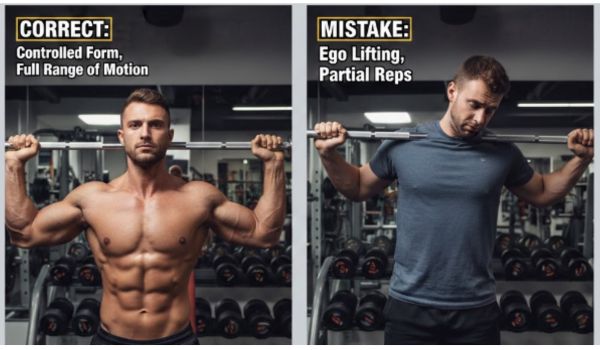
The biggest error I see is incredible redundancy. Doing flat barbell bench, flat dumbbell bench, and flat machine press in one day is utterly pointless. You are hammering the exact same movement pattern without stimulating any new or unique muscle fibers.
Another massive mistake is ignoring the mind-muscle connection just to move heavy weight. Ego lifting destroys progress. You must control the eccentric portion of every rep. A perfect routine fails if your execution resembles a fish flopping on the floor.
| Common Mistake | Negative Consequence | My Professional Pro-Tip Solution |
| Exercise Redundancy | Stagnant growth and excessive joint wear | Mix pressing angles (Incline, Flat, Decline) |
| Extreme Ego Lifting | High risk of dangerous pec tears | Lower the weight, focus on slow eccentrics |
| Skipping Isolation | Poor inner-chest and aesthetic development | Add deep flyes for an intense stretch |
Conclusion: Your Personalized Chest Strategy
Finding your perfect formula for how many chest exercises per workout is an evolving journey. It requires patience, meticulous tracking, and brutal honesty about your recovery. Start on the lower end of the volume spectrum and slowly build your way up.
Remember my 3-2-1 rule and apply it to your current split. Stop obsessing over adding more movements. Instead, obsess over the quality of the movements you already perform. Grab your weights and begin crafting that armor-plated chest today.
Frequently Asked Questions
How many exercises should I do for the chest?
Aim for 2 to 4 exercises per workout to maximize hypertrophy without triggering excessive fatigue or junk volume.
How many chest exercises per workout ?
To maximize muscle growth without hitting junk volume, you should perform 2 to 4 exercises per session. This ensures you hit the Pectoralis major from multiple angles while maintaining high training frequency and intensity.
This rule suggests performing 3 exercises per muscle group, consisting of 3 sets each, with 3 minutes of rest for strength.
What is the 4-8-12 rule?
It refers to a hierarchy of 4 exercises, 8 sets total per session, performed in the 12-rep range for optimal growth.
What are the top 3 chest exercises?
The Barbell bench press, Incline dumbbell press, and Weighted dips provide the best overall muscle fiber recruitment and thickness.
What is the 3-6-9-12 rule?
This is a volume-scaling method where you perform 3 to 12 reps depending on whether your goal is power, strength, or size.
Is 4×8 good for hypertrophy?
Yes, 4×8 is an excellent rep range for building mass as it balances heavy resistance training with significant time under tension.

Muddasir Tahir is the founder and lead researcher at Lifestyle Dominates. With a strong passion for fitness and self-improvement, Muddasir spends his time studying human movement and high-performance habits.
His goal is to provide informational topics that are easy to understand and backed by careful research. Muddasir believes that everyone has the power to improve their lifestyle by mastering the right techniques.
When he isn’t researching new ways to help people dominate their lives, he is dedicated to building a community of like-minded individuals who strive for strength and a better mindset every day.