

Finding the perfect nutrient timing strategy is the secret sauce for my most legendary gym sessions. I remember when I first started lifting, I would chug my drink in the parking lot and wonder why I felt nothing until my drive home. Now, after years of testing every ergogenic aids formula on the market, I have mastered the clock. Understanding how long does pre workout take to kick in is not just about convenience, it is about hitting your peak exactly when you reach your heavy sets.
In my experience, the general window for a solid energy boost is between 30 and 60 minutes. This duration allows the liquid to pass through your digestive system and enter the bloodstream. If you time it poorly, you might face an energy crash before you even finish your workout. I personally prefer hitting the gym exactly 45 minutes after my scoop to ensure the peak plasma concentration of stimulants aligns with my compound movements.
What Is Pre Workout and Why Do People Use It?
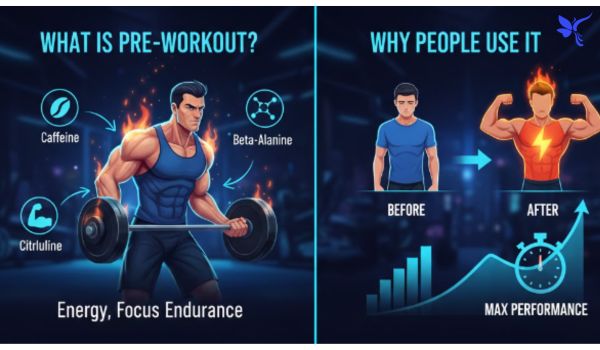
Pre-workout isn’t just a category of supplements; it’s a specific metabolic toolkit. These multi-ingredient dietary formulas are engineered to enhance athletic performance by combining stimulants and amino acids to delay fatigue and improve blood flow.
I remember my first time walking into a supplement store, overwhelmed by neon tubs. I grabbed a random jar, took a full scoop, and spent the next hour feeling like my skin was crawling while my heart raced. That experience taught me that not all supplements are created equal. To truly unlock your fitness goals safely, you need to understand the biochemistry of ingredients like caffeine anhydrous and the process of vasodilation.
Beyond the Caffeine Rush: Prime Your Physiology
I used to assume these powders were just expensive, fruit-flavored coffee substitutes. However, after looking at the science, I realized they are complex chemical matrices designed to prime your body for peak performance. They target specific metabolic pathways—like muscle soreness reduction and oxygen delivery—that a simple cup of coffee can’t touch.
For me, pre-workout serves as the bridge between motivation and capability. It’s not just about waking up; it’s about fueling resistance training with specific nutrients that your body cannot generate quickly enough on its own during an intense session.
The Core Benefits: Why We Use It
1. Delaying Fatigue (The Beta-Alanine “Burn”)
I love the feeling of beta-alanine working because it directly fights the “burn” in my muscles. This amino acid boosts carnosine synthesis, which acts as an intracellular pH buffer against acidity. When I use a formula with the right ergogenic aids, my perceived exertion drops, allowing me to push through high-repetition sets that would usually lead to failure.
2. Maximizing the “Pump” (Nitric Oxide & Vasodilation)
Nothing feels better than the skin-tightening sensation of a massive pump. Ingredients like L-Citrulline malate increase nitric oxide levels, leading to vasodilation (the widening of your blood vessels). This improved vascularity rushes oxygen and nutrients to your tired muscles, creating that “armor-plated” look and supporting faster recovery.
3. The Cognitive Edge
I have had days where my body was ready, but my mind was checked out. A high-quality formula engages the central nervous system (CNS) to sharpen mental focus. This neural drive is essential for maintaining perfect form during heavy lifts when your concentration starts to fade.
4. Power and Hypertrophy (ATP Production)
Creatine monohydrate is a non-negotiable for raw power. It replenishes adenosine triphosphate (ATP) stores—the primary fuel for explosive movements. This rapid energy regeneration is critical if your goal is hypertrophy and heavy lifting.
Decoding the Label: Key Ingredients
Understanding the label changed how I selected products for my own cabinet. I prioritize transparency—if a company hides behind a “proprietary blend,” I assume they are under-dosing expensive ingredients.
- Caffeine Anhydrous: A dehydrated, potent form of caffeine that hits the bloodstream faster than coffee. It blocks adenosine receptors to prevent drowsiness.
- L-Citrulline Malate vs. L-Arginine: I stopped wasting money on L-Arginine years ago. L-Citrulline is far superior because it has better bioavailability, resulting in a much higher spike in blood flow.
- BCAAs (Leucine, Isoleucine, Valine): These are the building blocks for new muscle. I use them to ensure my body burns fat rather than lean muscle tissue during fasted training.
- L-Theanine & Taurine: I look for this pairing to “smooth out” the caffeine hit. It prevents the jitters and the dreaded post-workout crash.
How to Use for Maximum Bioavailability
You cannot just “dry scoop” powder and expect miracles. I have refined my routine down to a science:
- Optimal Timing: I consume my drink exactly 20 to 30 minutes before training. This allows time for digestion so you hit the weights exactly when the stimulants peak in your blood.
- Dosage & Tolerance: I strongly advise beginners to start with a half-serving. Tolerance buildup is real; eventually, one scoop won’t feel like enough. I cycle off stimulants every few months to reset my receptors.
- The Hydration Factor: Supplements like creatine pull water into muscle cells. I always mix my powder with plenty of water and often add extra electrolytes (sodium, magnesium, potassium) to prevent cramping.
Choosing the Right Formula for Your Goals
One size does not fit all. Your specific training should dictate your ingredients:
Common Pitfalls & Safety
- The Dangers of Dry Scooping: Eating powder raw is a choking hazard and can damage tooth enamel. Your stomach needs liquid dilution to process these concentrated minerals properly.
- Managing Paresthesia: If your face itches, it’s just the beta-alanine. I’ve learned to love this “tingle” as a sign the product is working, but it can be startling for beginners.
- Third-Party Testing: I only trust tubs with NSF Certified or Informed-Choice logos. This ensures the product is free from banned substances and contaminants—crucial for any serious athlete.
The Quick Answer: How Long Does Pre Workout Take to Kick In?
If you want the short version, I usually feel the first wave of energy within 20 minutes, but the full “kick” takes 45 minutes. Your absorption rate is the main factor here, as the body needs time to process the bioactive compounds. I always suggest new lifters start their warm-up 30 minutes after ingestion to catch the rising tide of energy.
The speed at which you feel the effects depends on the water solubility of the specific brand you choose. I have found that a ready-to-drink (RTD) bottle often hits me faster than a poorly mixed powder. When clients ask me how long does pre workout take to kick in, I show them this internal absorption timeline:
| Time Elapsed | What I Usually Feel | Physiological Phase |
| 15 Minutes | Early mental alertness | Initial absorption |
| 30 Minutes | Paresthesia (Tingles) | Beta-Alanine activation |
| 45 Minutes | Maximum power and drive | Peak plasma concentration |
| 60 Minutes | Sustained endurance | Full systemic saturation |
Factors Affecting Pre Workout “Kick-In Time”
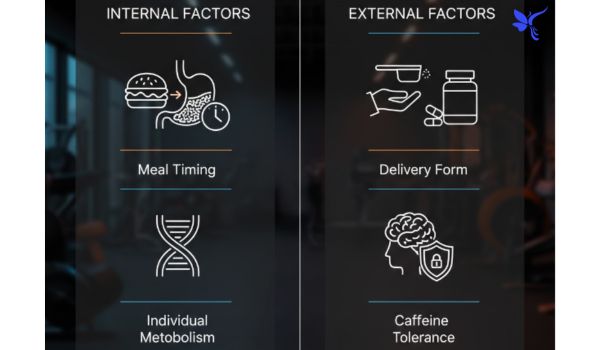
One mistake I made early on was ignoring my gastric emptying rate, which changes how fast the drink works. If I eat a massive steak right before my scoop, the protein and fat slow down the supplement bioavailability. I’ve learned that an empty stomach results in a much faster “kick” compared to a fed state.
Your internal metabolic rate also plays a massive role in how you process these chemicals. I have a friend who feels nothing for two hours, while I am ready to move mountains in twenty minutes. It is all about how your body handles the pharmacokinetics of the ingredients.
Individual Metabolism and Genetic Processing
My DNA actually dictates my reaction to stimulants through the CYP1A2 genetic metabolism pathway. Fast metabolizers clear the energy quickly, while slow metabolizers might feel the effects for many hours. I personally fall right in the middle, giving me a predictable energy curve.
Caffeine Sensitivity and Built-up Tolerance
I once went three months without a break and developed a massive tolerance buildup. I had to keep increasing my dosage recommendations just to feel a tingle. Now, I make sure to start cycling supplements every eight weeks to keep my receptors fresh and sensitive.
Meal Timing: Empty Stomach vs. Fed State
Training on an empty stomach makes the energy hit like a freight train, but it sometimes causes Gastrointestinal (GI) distress. Nowadays, I eat a light carb-based snack 90 minutes before my drink. This provides fuel for glycogen depletion without blocking the pre workout’s path.
Food-Drug Interactions: What slows down absorption?
I discovered that certain medications and even high-fiber foods can interfere with how ingredients cross the blood-brain barrier. Keeping your pre workout window “clean” ensures that nothing competes with the central nervous system stimulant. I avoid heavy dairy or high-fiber beans right before my dose.
Delivery Form: Powders vs. Capsules vs. Ready-to-Drink (RTD)
In my experience, Powder vs. Capsules is no contest; powders always win for speed. The liquid form bypasses the need for the stomach to break down a pill casing. However, I keep an RTD in my gym bag for those days when I forget my shaker bottle.
The Science of the “Sweet Spot”: When to Time Your Dose
Timing is everything when it comes to crushing your fitness goals. Understanding the best time to take pre-workout is about more than just a quick energy boost; it is about strategic supplementation. To hit your peak plasma concentration, you must synchronize your intake with your body’s metabolic rate.
I’ve found that the “sweet spot” for most athletes is exactly 45 minutes before the first heavy lift. This is because caffeine anhydrous reaches its highest concentration in the blood within 45 to 60 minutes.
- Start too early: You waste your energy on the drive to the gym.
- Wait too late: The vasodilation benefits won’t kick in until you’re already cooling down.
Gastric Emptying: Food vs. Fasted
Your gastric emptying rate—how fast your stomach moves its contents into the small intestine—dictates your “ergogenic window.”
- On a Full Meal: I push my intake back to 75 minutes to avoid gastrointestinal distress and “heavy” stomach feelings.
- On an Empty Stomach: 30 minutes is usually enough to feel the full effects. I often pair my scoop with a small rice cake to stabilize blood sugar and ensure a smoother energy curve.
Ingredient-Specific Timing for Explosive Power
A high-quality formula houses complex compounds that don’t all activate at the same time. While caffeine hits quickly, nitric oxide boosters (like L-Citrulline) take a bit longer to process in the small intestine.
I’ve noticed that my “pump” is significantly better when I give the formula at least 40 minutes to process. This delay allows for maximum oxygen delivery to the working muscles exactly when you start your working sets.
Tailoring Timing to Your Training Style
My timing for a heavy leg day is vastly different than my timing for a 5-mile run:
- Strength Training: Aim for the 45-minute mark to ensure your central nervous system (CNS) is fully primed for heavy compound lifts.
- HIIT & Cardio: I suggest a 60-minute buffer. High-intensity interval training (HIIT) already pushes your heart rate to the limit; taking a high-stimulant scoop too close to the start can lead to an uncomfortable “pounding” chest sensation.
- Endurance: Take your dose roughly 20 minutes prior to sustain a steady metabolism boost throughout the duration of the run.
The Performance Killers: Common Pitfalls
- Dry Scooping: I’ve seen this trend everywhere, but it’s a mistake. Your body needs at least 10 ounces of water to transport amino acids into the muscle tissue efficiently. Without liquid, you slow down absorption and risk accidental inhalation.
- Daily Use: Building a high stimulant tolerance by using it every single day is a major pitfall. To keep your performance at its peak, I recommend using the full scoop only on your hardest training days (like legs or back).
Signs Your Pre Workout Has “Kicked In”
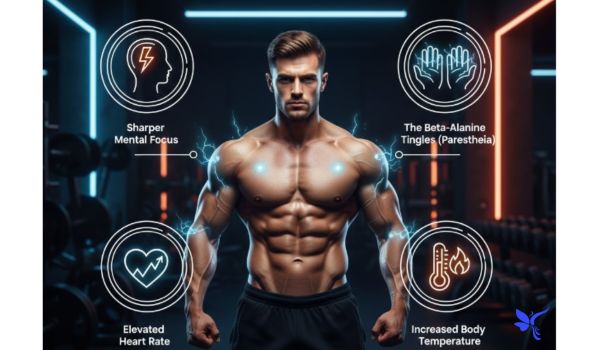
The most famous sign is the beta-alanine tingles, which feel like tiny electric shocks on your skin. This sensation, known as Paresthesia, tells me that my body is ready for high-intensity work. It is a weird feeling at first, but now I find it quite motivating.
When people ask how long does pre workout take to kick in, I tell them to wait for the focus. You will notice that your heart rate starts to climb and your skin feels warmer. This is the thermogenic effect in action as your body prepares for the physical tax of lifting.
Increased Focus and Mental Alertness
This mental shift is caused by the stimulants blocking fatigue signals in your head. I feel a sudden urge to stop scrolling on my phone and start moving weight. It is a distinct transition from a “relaxed” state to a “combat” state.
How Long Does Pre Workout Last? Understanding the Effects
Have you ever slammed a scoop of neon powder and felt like you could bench press a skyscraper? Typically, supplements kick in within 30 minutes and provide a potent surge for about 90 minutes. However, the total time these chemicals dance through your veins depends heavily on your unique metabolism.
Knowing how long pre-workout lasts is vital for avoiding midnight “ceiling-staring contests.” While the physical “kick” feels short, substances like caffeine linger much longer. Most users find the peak performance window sits between one and two hours after consumption.
The 30-Minute Rule: Onset and Absorption
Your body needs time to reach a peak plasma concentration of active ingredients. I usually start sipping my shaker 30 minutes before my first heavy set. This timing ensures the vasodilation effects are peaking exactly when I need that skin-splitting muscle pump.
Peak Performance Timing: Hitting the “Sweet Spot”
The “sweet spot” for peak performance usually occurs 60 minutes after ingestion. This is when your focus is sharpest and your strength is at its absolute maximum. I plan my heaviest compound lifts for this specific window to get the most “bang for my buck.”
The Science of Stamina: Ingredient Half-Life
Different ingredients have different “staying power.” Understanding this chemistry helps you master your routine:
- Caffeine Half-Life: Caffeine is an adenosine receptor antagonist that tricks your brain into feeling awake. Even after five hours, half of the dose is still circulating in your system. This is why late-afternoon scoops often lead to poor sleep quality.
- The Beta-Alanine “Itch”: The tingles, technically known as paresthesia, usually fade within 90 minutes. I’ve learned to enjoy this sensation; it’s a physical cue that my body is primed.
- The Muscle Pump: Nitric oxide boosters increase subcutaneous blood flow. This “full” look typically lasts 2 to 3 hours after your last rep.
Critical Factors Influencing Your Metabolism
Your Body Mass Index (BMI) and metabolic rate are the biggest reasons why one person feels “cracked out” while another feels nothing.
- BMI and Size: Larger individuals often need a higher optimal dosage to feel a significant change.
- Fasted vs. Fed States: Taking a scoop on an empty stomach leads to a violent, rapid onset and potentially a niacin flush. I prefer a light meal to smooth out the energy curve and prevent stomach issues.
- Hydration & Electrolytes: Proper electrolyte balance is required for these supplements to work. Dehydration slows down nutrient timing and makes the “come down” much more painful.
Managing the Aftermath: The Crash and Side Effects
The “dark side” of these powders includes jitters and anxiety. I once doubled my dose before a heavy leg day and ended up with a massive headache. This happens when excessive CNS stimulation triggers a surge of stress hormones that overwhelms your system.
- Sleep Disturbance: If you train after 6 PM, stim-free alternatives are a total game-changer. These focus on pump ingredients like arginine without the caffeine, allowing you to hit your anabolic window and still fall asleep.
- Digestive Upset: Many users struggle with gut health issues due to artificial sweeteners. I recommend high liquid dilution—dry scooping is a choking hazard and slows down absorption.
Long-Term Strategy: Cycling and Potency
To keep the magic alive, you must practice cycling off stimulants every few weeks. If you don’t, your brain will grow more receptors and the powder will stop working. I take a full week off every month to keep my adenosine receptor sensitivity high.
Pro Tip on Shelf Life: Clumpy powder usually means moisture got in, which can ruin the bioavailability of the ingredients. Always keep the silica packet inside the tub to prevent it from turning into a solid brick!
Safety Tips and Best Practices for Supplementation
I always tell people that more is not better when it comes to these ergogenic aids. I once took a double scoop of a high-stim product and felt like my heart was going to jump out of my chest. Stick to the dosage recommendations on the label until you know your limit.
You also need to prioritize cycling supplements so your body doesn’t become dependent on them. I take a full week off every month to let my nervous system reset. This keeps the “kick” strong and prevents me from needing dangerous amounts of caffeine.
Finding Your Ideal Dosage (Beginner vs. Advanced)
If you are a beginner, start with a half-scoop to see how your digestive system reacts. I’ve seen many people get sick because they jumped into an advanced formula too quickly. Build up your tolerance slowly and listen to your body’s signals.
Hydration: The Forgotten Pre Workout Essential
Many stimulants act as diuretics, which can lead to dehydration if you aren’t careful. I drink at least 16 ounces of water with my scoop to ensure proper bioavailability. Water is the vehicle that carries these ingredients to your thirsty muscles.
Reality to Consider about Pre Workout
Most articles don’t talk about how your body weight actually doesn’t change the kick-in speed much. Whether you are 150 lbs or 250 lbs, the caffeine still has to travel the same path to your brain. It is the intensity of the feeling that changes, not the timing of how long does pre workout take to kick in.
I also want to highlight that insulin sensitivity can actually be improved by certain pre workout ingredients. This is a huge benefit that most people ignore when they only focus on energy. Use these tools to improve your long-term metabolic health, not just your daily pump.
Pre Workout for Evening Trainees: Protecting Your Sleep Hygiene
If you must train late, stick to citrulline malate and other non-stim options. Avoiding sleep hygiene interference is the best thing you can do for your muscle growth. I personally use a “pump-only” stack after 6 PM to ensure I can still fall asleep.
Choosing the Right Supplement for Your Goals
When I shop for a new tub, I look for transparent labels that show the exact amount of creatine monohydrate. Avoid “proprietary blends” where you don’t know the specific dosage recommendations. I want to know exactly what I am putting into my body before a heavy session.
Establishing a nutrient timing strategy that works for you is a process of trial and error. I kept a “workout log” for a month, noting down exactly when I took my scoop and how I felt. This data helped me find my perfect 45-minute window for success.
Conclusion: Maximizing Your Performance
Mastering how long does pre workout take to kick in changed the way I look at my training. No more waiting around for energy or crashing halfway through my squats. I now treat my supplement timing with the same respect as my rep ranges and rest periods.
Take the time to experiment with different windows and food combinations. Your body is a complex machine, and the “kick” is the spark that starts the engine. Once you find your rhythm, you will never go back to a “un-timed” workout again.
FAQ
What is the 2 2 2 rule in gym?
It is a consistency framework where you train twice a week for two months before increasing frequency to ensure long-term habit formation.
How to know if preworkout is working?
You will feel a surge in mental focus, an elevated heart rate, and often a tingling sensation on the skin known as paresthesia.
Why do you have to wait 30 minutes after taking pre workout?
This time is required for the absorption rate to peak, allowing ingredients like caffeine to reach their peak plasma concentration in your blood.
Is there a downside to pre workout?
Potential downsides include Gastrointestinal (GI) distress, jitters, and sleep hygiene interference if taken too close to bedtime.
What kills muscle gains the most?
Inadequate protein intake, chronic lack of sleep, and failing to implement progressive overload are the primary “gain killers.”
How to tell if muscle is overtrained?
Signs include persistent soreness lasting over five days, a decline in physical performance, and a resting heart rate that stays unusually high.

Muddasir Tahir is the founder and lead researcher at Lifestyle Dominates. With a strong passion for fitness and self-improvement, Muddasir spends his time studying human movement and high-performance habits.
His goal is to provide informational topics that are easy to understand and backed by careful research. Muddasir believes that everyone has the power to improve their lifestyle by mastering the right techniques.
When he isn’t researching new ways to help people dominate their lives, he is dedicated to building a community of like-minded individuals who strive for strength and a better mindset every day.