

Are you ready to unlock a new level of chest development without ever lying down on a bench? The standing dumbbell chest fly is a truly powerful and versatile exercise that can completely transform your physique. Unlike traditional bench presses, this dynamic functional movement challenges your stability and strengthens your core engagement while isolating your pectorals for maximum growth.
It’s a fantastic addition to any workout routine aimed at building pure strength and size. Master the proper form and this simple move will help you achieve a truly dominant upper body with minimal equipment.
Why Dumbbell Chest Flies Are Essential for Chest Development
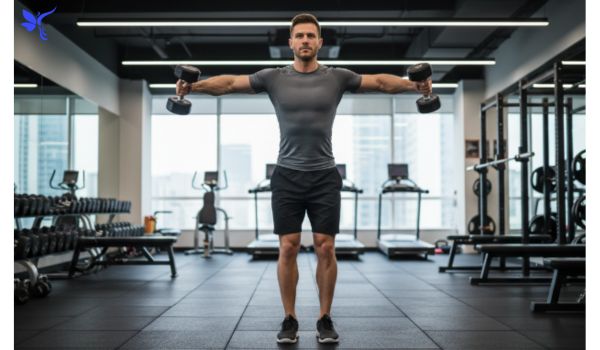
This unique movement is a powerful tool for your chest workout. Unlike a chest press, which focuses on pushing, the standing dumbbell chest fly isolates and stretches your pectoral fibers from a different angle. It also acts as a fantastic chest opener, improving flexibility and helping you achieve a fuller, more dominant chest aesthetic. It’s a key exercise that you simply can’t ignore if you’re serious about your physique. This is crucial for muscle hypertrophy, because it helps you target all parts of your pectoralis major.
The standing dumbbell chest fly forces you to use your stability muscles. This makes the training program more effective. It challenges your body in a new way, leading to increased metabolic rate. You are building muscle, but you are also improving your balance. This is why many people use this dumbbell fly to get a powerful upper body. It is a great way to add endurance and strength training to your routine without needing a lot of equipment.
What Muscles Do Dumbbell Chest Flies Work?
This particular exercise standing dumbbell chest fly is a powerhouse for your upper body. It primarily targets the pectoralis major, which gives you that sculpted and well-defined look. It puts special focus on the sternal head of the chest, which is the big, central part of your chest. This ensures your chest muscles grow evenly. It is a fantastic way to develop the main part of your chest.
Beyond your pectorals, this movement also engages other key muscles. Your deltoids (specifically your anterior deltoids) and triceps work as supporting muscles. They help you control the dumbbells throughout the motion. The standing dumbbell chest fly demands that your back muscles work to keep your body stable. You are training more than just your chest; you are training your whole torso.
How to Perform the Dumbbell Chest Fly with Perfect Form
You must learn proper form before you try standing dumbbell chets fly exercise. It is the most important part of any workout. You can not build a great chest if you risk injury prevention. The key is to perform the motion slowly and with total control. This way, you will get the most benefit for your pectorals.
For the standing dumbbell chest fly, your focus should be on the muscle, not the weight. A common mistake is using a heavy weight that turns the exercise into a shoulder movement. Keep the weight light. You should feel the muscles in your chest working. You want to get the best muscle activation from start to finish.
Equipment You’ll Need
Before you dive in, you need to make sure you have the right gear for the job, especially for the Standing Dumbbell Chest Fly. You’ll need a pair of light dumbbells to start, so you can focus on mastering the form before adding resistance. Remember that proper form is the foundation of every successful workout. For a more direct focus on the chest, many people use resistance bands or a fly machine instead. These tools provide a constant pulling force horizontally.
Setting Up and Getting into Position
First, grab your dumbbells and hold one in each hand. Stand with your feet about shoulder-width apart. Keep your knees slightly bent. Your core should be tight and your back straight. The dumbbells should be at your sides. Your palms should face forward, like you are about to give a hug. This is the correct starting position for the Standing Dumbbell Chest Fly.
Step-by-Step Instructions for the Dumbbell Fly
- Before you start, take a deep breath and tighten your stomach muscles.
- Slightly bend your elbows and keep them from moving.
- Raise the dumbbells out and up in an arching motion until they are in front of your chest.
- Squeeze your pectorals at the top. This is the peak contraction.
- Slowly lower the dumbbells back to the starting position.
Common Mistakes to Avoid and Expert Tips for Your Dumbbell Flies
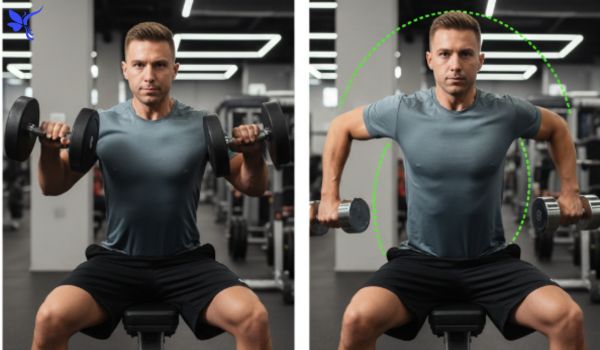
Many lifters make a big mistake when they do the standing dumbbell chest fly. They bend their elbows too much. This turns the fly into a dumbbell bench press. You should keep your elbows in a fixed, slightly bent position throughout the entire movement. The goal is to isolate the chest muscles. You should feel a stretch in your pectorals, not a push in your arms.
A huge mistake is using too much weight. This is a common problem in bodybuilding. It can hurt your shoulders and elbows. A better way is to focus on time under tension. This means you should do each repetition slowly. Count to two seconds as you lift and two seconds as you lower. This simple tip will improve your gains. It also helps you with injury prevention.
Mastering Dumbbell Fly Variations
The Standing Dumbbell Chest Fly is just one option. The best training program uses many different exercise variations. This helps you work your chest from every angle and prevents hitting a plateau in strength and size. Different variations work different parts of your chest. This ensures a balanced, symmetrical look that everyone wants.
For example, the classic dumbbell chest fly on a flat bench works the whole pectoralis major. An incline dumbbell fly puts a special focus on the upper chest or clavicular head. A decline dumbbell fly works the lower chest. Each one serves a specific purpose in building a well-rounded physique.
Incline Bench Dumbbell Fly
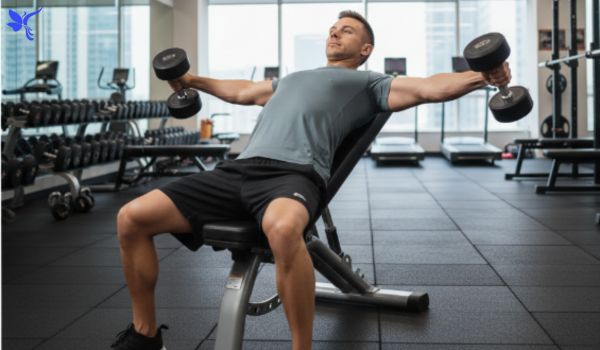
The incline dumbbell fly is a simple yet powerful exercise. It targets the clavicular head of your pectorals. This is the upper part of your chest that gives it that full, lifted look. When you do the incline dumbbell fly, make sure your back is firmly against the bench. This is a crucial element for proper form.
Standing Chest Fly
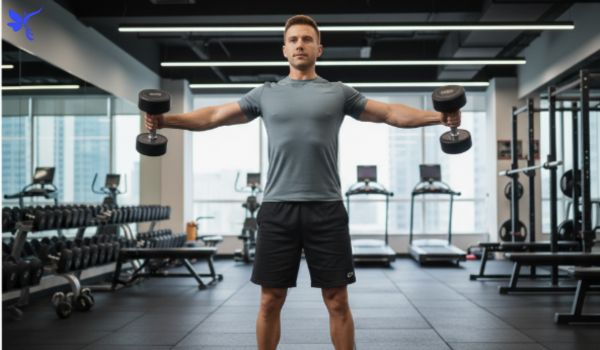
The standing dumbbell chest fly can be a great functional movement. It is most effective when you use a standing cable crossover machine. Here, the cables provide constant tension from the sides. This is different from dumbbells, where gravity only pulls straight down. With cables, you get a pure chest fly motion. The cable crossover is a true chest exercise.
Reverse Fly
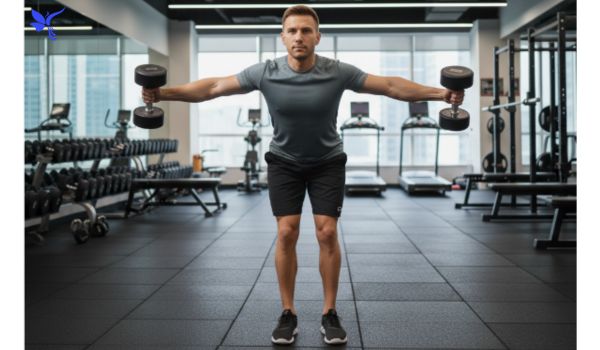
The reverse fly is an excellent exercise for your posture. It works the muscles in your upper back and shoulders. It is a fantastic complement to any chest workout. The reverse fly helps to balance your upper body strength. It also helps to pull your shoulders back and open up your chest, which is great for posture improvement.
Key Safety Tips for Injury Prevention
Safety should be your number one priority in any training program like Standing Dumbbell Chest Fly. A proper warm-up is essential before you do any chest workouts. You should do some light cardio and dynamic stretches. This gets blood flowing to your muscles. It prepares your body for the stress of lifting.
When performing the standing dumbbell chest fly, always remember the importance of scapular retraction. This means you should squeeze your shoulder blades together. It helps protect your shoulders. Another key is to always have some core engagement. This keeps your body stable. A good form will always give you better results and prevent injuries.
How to Integrate Dumbbell Flies into Your Chest Workout Routine
You can add the dumbbell chest fly to your workout routine in a few ways. You can do it at the start to pre-exhaust your muscles. Or you can do it at the end to get a final pump. It is a great finisher for any chest workout.
Here is a sample workout routine that uses the dumbbell fly.
| Exercise | Sets | Reps |
| Dumbbell Bench Press | 3 | 8-12 |
| Dumbbell Chest Fly | 3 | 10-15 |
| Incline Dumbbell Fly | 3 | 10-15 |
| Push-ups | 3 | To Failure |
Progression and Advanced Techniques for Maximum Results
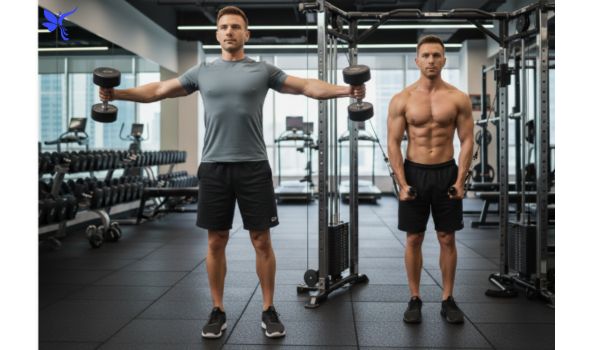
Once you get comfortable with the standing dumbbell chest fly, you can progress. You can increase the weight or increase your reps. You can also try more advanced training program methods. This will help you achieve even greater muscle hypertrophy and endurance.
For example, you can try dropsets. This is where you do a set until you can’t anymore. Then, you immediately drop to a lighter weight and continue. This will increase your time under tension. Another idea is to do supersets. This is where you do two exercises back-to-back without rest. For example, do a set of Dumbbell Chest Fly and then immediately do a set of push-ups. This is a great way to boost your metabolic rate.
Conclusion
The Standing Dumbbell Chest Fly is an outstanding functional movement. It can help you build a strong, defined chest without a gym. Just remember to use proper form, focus on muscle activation, and progress slowly. When you do it right, this exercise will become a powerful tool in your bodybuilding journey. So grab some dumbbells and start your new workout routine today.
FAQ
Are standing dumbbell chest flys effective?
Yes, they are effective for targeting the chest when done with proper form and can also improve stability and core engagement.
How to do chest flys with dumbbells standing up?
Stand with a slight bend in your knees, hold dumbbells with palms facing forward, and raise your arms out in an arc until they meet in front of your chest.
What are common mistakes in standing dumbbell chest fly?
Common mistakes include using too much weight, locking your elbows, or turning the fly into a press.
Should dumbbell fly straight or bent arms?
You should always perform the dumbbell fly with a slight, fixed bend in your elbows to isolate the pectorals and protect your joints.
Should dumbbell flys be flat or incline?
Both flat and incline dumbbell flys are effective; flat works the whole chest, while incline targets the upper chest.
How to hit chest with dumbbells standing?
To hit your chest with dumbbells while standing, you must perform the standing dumbbell chest fly with a focus on squeezing your chest muscles, not just lifting the weight.

Muddasir Tahir is the founder and lead researcher at Lifestyle Dominates. With a strong passion for fitness and self-improvement, Muddasir spends his time studying human movement and high-performance habits.
His goal is to provide informational topics that are easy to understand and backed by careful research. Muddasir believes that everyone has the power to improve their lifestyle by mastering the right techniques.
When he isn’t researching new ways to help people dominate their lives, he is dedicated to building a community of like-minded individuals who strive for strength and a better mindset every day.