

Feeling a mysterious tightness in your hip or a nagging ache in your knee? It might be related to your Tensor Fasciae Latae (TFL), a small but powerful muscle on your outer hip. This comprehensive guide will explore the importance of a proper Tensor Fasciae Latae stretch or tfl stretch and its role in improving your overall Body Mechanics. You’ll discover how to identify tightness in your TFL, learn effective stretching techniques, and understand how releasing this muscle can alleviate common postural issues and even reduce chronic pain. By addressing the root cause, you can unlock greater freedom of movement and enhance your physical well-being.
What Is Fascia and Why Is It So Important?
Imagine your body is a complex system of interconnected pulleys and ropes. That’s your fascia. It’s a continuous, three-dimensional web of connective tissue that wraps around every muscle, bone, nerve, and organ. This incredible system holds everything in place. Healthy fascia is smooth and pliable. It allows for effortless movement and proper blood flow. However, life happens. Stress, poor posture, injuries, and a sedentary lifestyle can cause this web to become tight and restricted. These adhesions can be a real pain. They can lead to tissue restrictions and limited range of motion.
You might not know you have fascial issues. But your body feels it. This connective tissue is filled with nerves. It sends signals about movement and pain. When your fascia gets stuck, it can cause a domino effect. One area of tightness can lead to chronic pain in another. Think of it like a ripple effect. For instance, a knot in your shoulder could be caused by a problem in your hip. Understanding this web is the first step to feeling better. It’s truly a holistic system. This is a topic that few people truly grasp. It deserves your full attention. For those dealing with hip tightness and its related issues, a targeted TFL stretch can be a simple yet effective way to begin releasing fascial tension and restoring proper function.
The Anatomy and Function of Fascia
Fascia is more than just a wrapping. It provides structural support for your whole body. It transmits force from your muscles to your bones. It also protects your organs. The Nervous System is deeply intertwined with it. Proprioception, your body’s sense of its position in space, is heavily dependent on healthy fascial function. When you move, your fascia should slide and glide freely. This freedom of movement is what makes you feel graceful and strong. A regular TFL stretch is a great way to ensure that this vital connective tissue in your hips and legs remains pliable, promoting better movement and reducing the risk of injury.
Understanding Fascia
Think of fascia as a hydrated, fluid-filled substance. It’s like a damp sponge. When it’s healthy, it glides freely. But when it becomes dehydrated from a lack of movement, it gets sticky. This is where fascial adhesions form. They can be painful. This phenomenon is why your body might feel like the Tin Man from The Wizard of Oz. You are stiff and creaky.
Fascial Adhesions and Their Causes
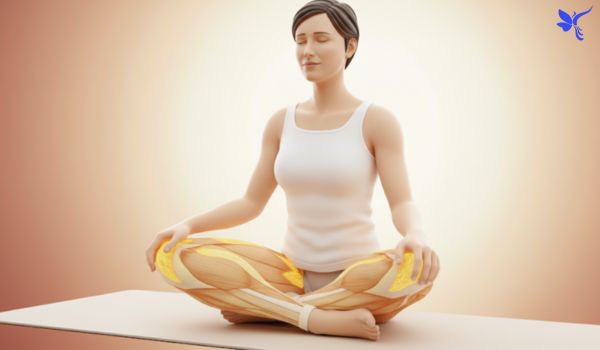
Adhesions often occur at congested areas. They can be caused by an injury, surgery, or repetitive movements. Even a lack of movement can cause them. Your fascia needs motion to stay hydrated. A long day sitting at a desk can cause adhesions to build up. This is a common problem for many people. These restrictions are what hold you back from peak performance. Regularly performing a TFL stretch is an effective way to combat the tightness and adhesions that build up from a sedentary lifestyle, helping to restore your full range of motion.
Why Healthy Fascia Matters
Keeping your fascia healthy is a smart investment in your future self. Good fascial health leads to decreased pain and improved posture. It reduces your vulnerability to injury. It can even improve things like digestion and sleep. Healthy fascia is a game-changer. It helps your body function with ease. It allows you to move freely and without pain. Simple practices, such as a consistent Tensor Fasciae Latae stretch, are excellent steps to ensure the healthy, pliable fascia needed for these benefits.
All About the Tensor Fasciae Latae (TFL)
The Tensor Fasciae Latae (TFL) is a small yet mighty muscle. It lives on the outside of your hip. Its main job is to help with walking and stabilizing your pelvis. A happy TFL is essential for good Body Mechanics. A tight TFL is a common problem. It can be a real pain in the neck—or, more accurately, the hip. It often leads to joint stiffness and other postural issues. You might feel it as a tightness in the front of your hip. This discomfort can even radiate down your leg.
What causes this little muscle to get so tight? Too much sitting is a big one. Running or cycling without a proper cool-down can also be a culprit. A tight Tensor Fasciae Latae can pull your pelvis forward. This creates an Anterior Pelvic Tilt. This imbalance can cause problems all the way down the leg. It can lead to issues with your Iliotibial (IT) Band. Learning a good TFL stretch is crucial for anyone who is active. It can help you find balance again.
Tensor Fasciae Latae Anatomy 101
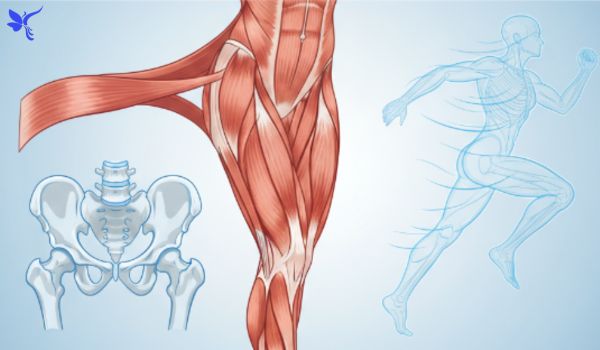
The TFL is a superficial muscle. It originates from the outer part of your hip bone. From there, it inserts into the Iliotibial (IT) Band. This band then travels down the outside of your thigh to the top of your shin bone. The relationship between your TFL and your IT Band is what causes so much trouble. When the TFL gets tight, it pulls on that band. This can lead to knee and hip pain.
Functions of the Tensor Fasciae Latae
This little muscle does a lot of work. It helps flex your hip, rotate your leg inward, and abduct it. It also helps stabilize your knee during walking. This makes it a key player in almost all lower body movement. Its deep connections mean that issues here can affect your entire kinetic chain.
Common TFL Problems: How to Know if Your TFL Is Tight
You might be wondering if your TFL is the cause of your troubles. Two simple self-tests can give you a clue. The first is the Thomas Test. Lie on your back on a firm surface. Pull one knee to your chest, holding it there. If the thigh on your other leg rises off the surface, your Tensor Fasciae Latae may be tight. The second is the Ober’s Test. Lie on your side with the affected leg on top. A partner should support your leg, allowing it to drop. If it doesn’t drop past the horizontal line of your hip, you likely have tightness. If either of these tests indicates tension, incorporating a regular Tensor Fasciae Latae stretch into your routine is a perfect next step to address the issue. A simple Tensor Fasciae Latae stretch can often provide immediate relief from this tightness
What Causes a Tight Tensor Fasciae Latae?
The modern world is a big factor. A desk job or a long commute means you spend hours with your hips in a flexed position. This position shortens the TFL. Runners and cyclists can also develop a tight TFL. Repetitive forward movement can cause this muscle to become overused. A lack of glute activation also contributes to the problem. When your glutes are weak, the TFL has to work overtime.
The Effect of a Tight TFL on Posture
A tight TFL can wreak havoc on your posture. It can cause your pelvis to tilt forward. This creates an Anterior Pelvic Tilt. It can also cause a lateral tilt, where one side of your pelvis is higher than the other. These structural imbalances can lead to pain in your knees, hips, and back. Your body tries to compensate for the tightness. This leads to a chain reaction of postural issues. Incorporating a consistent TFL stretch can help to release this tension, addressing the root cause of these postural problems and restoring proper alignment.
The Best Tensor Fasciae Latae (TFL) Stretches and Exercises
Before you start any TFL stretch, it is smart to test your mobility. The Tensor Fasciae Latae Length Test can give you a clear picture. The Thomas Test and Ober’s Test are two easy ways to check for tightness. They can give you real insight. If your results show tightness, don’t worry. There are many great ways to start your journey. You just need to find the right TFL stretch for you.
Effective TFL Stretches
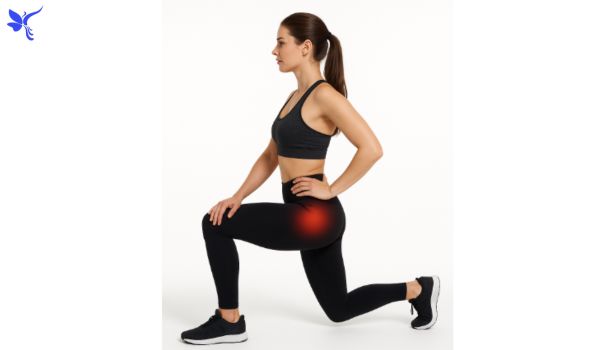
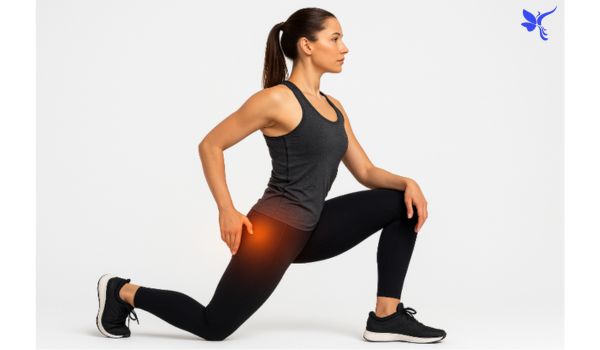
Stretching is a powerful tool. Here are some of the most effective stretches. Each targets the TFL in a slightly different way. For the Standing TFL Stretch, stand next to a wall. Cross the leg you want to stretch behind the other. Then, lean your hips into the wall. You should feel it on the outer hip. For the Lunge TFL Stretch, get into a kneeling lunge position. Tuck your pelvis and lean forward gently. This targets the TFL from a different angle. The Cross-Over Side Lean on Wall is similar to the standing stretch. This time you’ll lean your entire body against a wall while crossing your legs. Other great options are the Kneeling Lunge, the Deep Cross-Over, and The Pretzel. The Side-Lying Knee Bend and Eccentric Loading are also very useful.
Unique TFL Stretch Techniques
Beyond the basics, there are some unique methods that target the TFL with precision. The Active Progressive TFL Stretch involves using neuromuscular principles. You actively contract and relax the muscles to get a deeper stretch. The Active 4-Point TFL Stretch is another powerful technique. You use your own body’s resistance to create a more effective stretch. These methods go beyond passive stretching. They teach your body new patterns.
Glute Activation: Releasing the TFL
Stretching alone is often not enough. You also need to strengthen the opposing muscles. Glute Activation is key here. Your glutes and TFL are a team. When your glutes are weak, the TFL takes over. By strengthening your glutes, you use a principle called Reciprocal inhibition. This means when one muscle contracts, its opposite relaxes. So, strong glutes signal the TFL to release its tension.
Targeting the Thoracolumbar Fascia for Back Health
The thoracolumbar fascia is a diamond-shaped sheet of connective tissue in your lower back. It plays a big role in stabilizing your spine. When it gets tight, you can feel Lower Back Pain. It can also affect your ability to move your torso. To keep this area healthy, you should consider a mix of strengthening and stretching. It’s the key to a healthy back.
Thoracolumbar Fascia and Back Pain: Understanding the Connection
This fascial layer connects your lats to your glutes and opposing muscles. It helps transfer force and stabilize the core. When this force transfer is poor, it can lead to pain. Your body compensates in strange ways. The pain you feel in your lower back may actually be a problem in your hips or even your feet. This is why a targeted approach to the thoracolumbar fascia is so important.
Thoracolumbar Fascia Strengthening Exercises
Strengthening your core is a good start. It supports the thoracolumbar fascia. You can try exercises like the Side Bridge and the Bird Dog. They are simple but effective. They target your deep core muscles. The The McGill Curl-Up is another great option. It’s a gentle movement that builds core endurance without stressing the spine. These exercises are a great form of Corrective Work.
Foam Rolling for Fascial Health
Foam rolling for fascial health can also help. Rolling over the upper and low back can release tension. This helps with Post-Activity Restoration after a tough workout. Just a few minutes of rolling can make a world of difference. It’s a great form of Myofascial release.
Additional Stretches for the Thoracolumbar Fascia
The Downward-Facing Dog is a fantastic stretch. It lengthens the entire back of your body. The Heel Sit provides a gentle stretch for the feet and ankles, which can affect the entire posterior chain. The Standing Hip Flexor Stretch helps release tightness in the front of your hips. This tightness can contribute to a tight thoracolumbar fascia. The Standing Figure-Four Stretch and Extended Side Angle Pose are also wonderful for opening up the hips and torso.
Alternative and Advanced Fascia Therapies
Sometimes, a regular Tensor Fasciae Latae stretch is not enough. That’s when you might want to consider professional help. Fascial Stretch Therapy (FST) is a popular option. It is a unique system. A certified therapist uses specific stretches and movements. The goal is to unravel restrictions in your fascia. FST can improve circulation. It can also help with Rehab from an injury. Many people love it because it is painless. It works with your Nervous System to get better results.
Understanding Fascia Blasting
Fascia Blasting is another therapy you may have heard of. It uses a tool to apply pressure to the fascia. The idea is to break up adhesions and reduce the appearance of cellulite. However, this is not a long-term fix. There can be side effects like bruising and inflammation. You might get temporary results. But it doesn’t fix the underlying cause. True healing requires a holistic approach. It’s not about quick fixes.
Functional Patterns: A Long-Term Solution
A better way to address the root cause is with Functional Patterns. This method focuses on correcting dysfunctional movement patterns. It teaches your body how to move correctly. It helps to fix structural imbalances. Functional Patterns aims for lasting solutions. It’s a way to reclaim your natural movement. Many people find this method more effective than just basic stretching or Fascia Blasting. It helps you find lasting relief. It helps you move better, for life.
Why I Stopped Fascia Blasting & Fascia Stretching

Many people have realized that Fascia Blasting and basic stretching are often short-term fixes. They might provide relief. However, they don’t fix the root cause. This is why a lot of therapists are moving away from these methods. They are now focusing on more permanent solutions. They use methods like Functional Patterns. The goal is to improve your body’s entire system. It’s a shift from just treating symptoms to truly fixing the problem. This is a much better approach. It leads to real, lasting results.
Conclusion
We have journeyed together through the amazing world of fascia. You now have a deeper understanding of this complex system. You know the importance of a healthy Tensor Fasciae Latae, and you have the tools to achieve it. Remember, true and lasting relief goes beyond a simple TFL stretch. It requires a holistic approach. It involves a mix of targeted stretches, strengthening exercises, and a deeper awareness of your body’s mechanics. You can improve your range of motion. You can alleviate chronic pain. By focusing on your fascia, you are investing in your body’s overall well-being. Start today. Your body will thank you for it.
FAQ
What causes a tight tensor fasciae latae?
A tight TFL is often caused by a sedentary lifestyle, excessive running, cycling, or other repetitive movements.
How to tell if TFL is tight?
You can check for TFL tightness using specific tests like the Ober’s Test or the Thomas Test.
What does tensor fascia lata pain feel like?
Pain in the TFL often feels like a deep ache or a sharp pain on the outside of your hip.
Why is my tensor fasciae latae so tight?
Your TFL might be tight because of poor Body Mechanics, weak glute activation, or an imbalance in your kinetic chain.
How do you loosen tight tensor fasciae latae?
You can loosen a tight TFL with specific stretches and Myofascial release techniques.
How do I stretch my tensor fasciae latae?
You can stretch it with a standing Tensor Fasciae Latae stretch or a lying cross-over stretch.
How do you stretch your glutes for TFL?
Stretching your glutes can help the TFL by addressing muscular imbalances.
How to self-release TFL?
Self-releasing the TFL can be done with a foam roller or a tennis ball.
What are the benefits of tensor fasciae latae stretch?
Benefits include improved Hip Mobility, reduced knee pain, and better posture.
How to stretch the fascia lata?
The fascia lata can be stretched with a Tensor Fasciae Latae stretch and other lateral hip stretches.
How to train fascia lata?
You can train the fascia lata indirectly through mobility work and strengthening exercises for the hips and legs.
Does stretching stretch fascia?
Yes, stretching can help lengthen and hydrate the fascia, improving its pliability.
How do I stretch my fascia?
You can stretch your fascia with gentle, sustained stretches and movements that target different fascial lines.
How do you release fascia from your body?
Releasing fascia can be done through foam rolling, massage, or specific stretches.
What is fascial stretch therapy?
Fascial Stretch Therapy (FST) is a form of assisted stretching that targets the entire fascial system to improve flexibility and reduce pain.
Is fascial stretch therapy legit?
Yes, FST is considered a legitimate and effective therapy, often used by athletes and physical therapists.
How do you loosen the thoracolumbar fascia?
The thoracolumbar fascia can be loosened with stretches that target the lower back and hips.
What are the symptoms of a tight thoracolumbar fascia?
Symptoms of a tight thoracolumbar fascia include Lower Back Pain, stiffness, and reduced trunk mobility.
How do you relieve thoracolumbar fascia pain?
Relief for thoracolumbar fascia pain can come from a mix of stretching, foam rolling, and Core strengthening exercises.
What exercises are good for thoracolumbar fascia pain?
Exercises like the Bird Dog, Side Bridge, and cat-camel pose are excellent for this type of pain.

I am Muddasir Tahir, a dedicated Lifestyle strategist and fitness expert with over 5 years of professional experience. I launched Lifestyle Dominates to serve as your primary source for building mental clarity and physical power. My goal is to give you the tools to improve your daily productivity and overall health. I focus on providing science-backed advice to help you take full control of your modern life.