

Located on the side of your hip, the Tensor Fasciae Latae (TFL) is a small yet crucial muscle. It plays a critical role in stabilizing your pelvis and helping you walk and run. However, when this muscle becomes overly tight, it can lead to a host of problems, including stubborn TFL tightness and hip pain.
Often, this pain is a direct result of muscle imbalances and can contribute to common issues like a debilitating overuse injury of the iliotibial band. Understanding this key piece of connective tissue is the first step toward finding lasting relief and preventing future discomfort.
What Is the Tensor Fasciae Latae(TFL)?
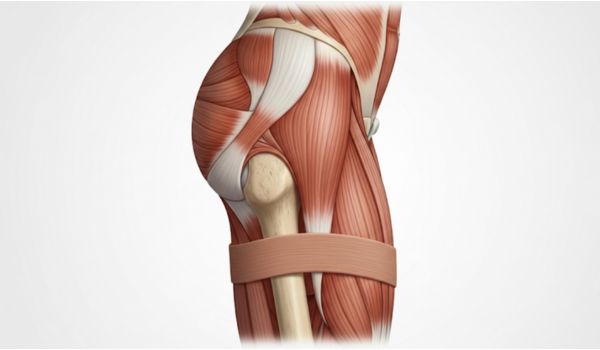
Picture a small, unassuming muscle nestled on the top-front of your outer hip. That’s your Tensor Fasciae Latae. It may be little, but it’s a mighty powerhouse. This muscle is a crucial hip abductor and hip flexor, helping you raise your leg out to the side and bring your knee up toward your chest. It’s also an unsung hero of stability, ensuring your pelvis stays level when you stand on one leg.
What Is the IT Band?
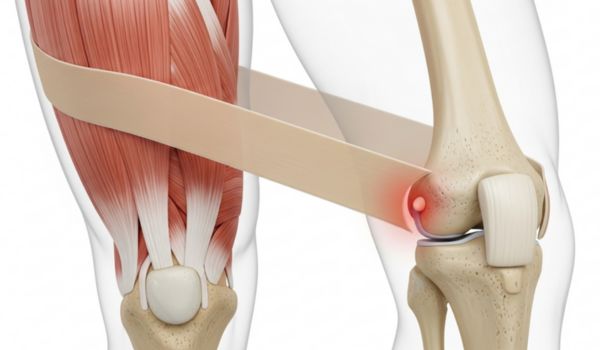
Think of the IT band not as a muscle, but as a long, fibrous tendon. It’s a thick cord of connective tissue that starts at your pelvis and runs all the way down the side of your thigh, attaching just below your knee. Its job is to provide stability to your knee joint. The TFL and your glutes are what pull on this strong band. It is so tough and so unyielding, in fact, that it’s almost impossible to truly stretch it on its own.
Tensor Fasciae Latae (TFL) Anatomy and Function
Tensor Fasciae Latae Anatomy 101
The anatomy of the Tensor Fasciae Latae is both simple and sophisticated. As we mentioned, it’s a small, fusiform muscle. This powerful little muscle is the main driver of the IT band, and its health is directly related to the health of the entire outer hip and thigh. The TFL is what allows for your effortless stride and balanced walk.
Origin and Insertion
The TFL originates from the outer lip of the anterior iliac crest, the bony part of your hip you can feel at the front. From there, it travels down your outer thigh and inserts into the iliotibial tract, another name for the IT band. The band then continues its journey to a point just below the lateral condyle of the tibia. This direct line of connection is why problems with one often lead to problems with the other.
Relations and Innervation
The TFL doesn’t work in a vacuum; it has important relationships with other muscles. It works closely with the glutes, particularly the gluteus medius. It receives its nerve supply from the superior gluteal nerve, and blood flows to it via the ascending branch of the lateral femoral circumflex artery. Without proper signals and nourishment, its functionality can be severely compromised.
Functions of the Tensor Fasciae Latae
Your Tensor Fasciae Latae‘s primary function is essential for strong, stable motion. It assists with hip flexion, abduction, and internal rotation, making it crucial for activities like walking and running. The TFL also helps in knee extension and provides tension to the IT band, which helps stabilize your knee during movement. In short, it’s an all-star player in the grand symphony of your lower body.
Iliotibial Band Syndrome (ITBS) Explained
What Is Iliotibial Band Syndrome (ITBS)?
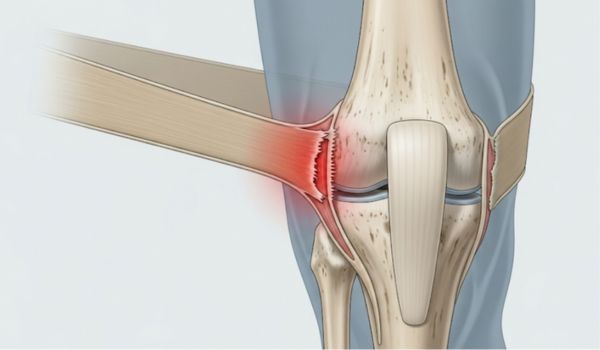
What’s the real difference between TFL and IT band problems? This is a great question. While a tight Tensor Fasciae Latae is a muscular problem, Iliotibial Band Syndrome or ITBS is a connective tissue issue. This condition occurs when your IT band rubs against a bony prominence on your outer knee, causing friction that leads to inflammation and irritation. Think of it like a rope that is constantly being sawed back and forth across a rock. This can cause severe knee pain that forces you to stop what you’re doing.
Who Does Iliotibial Band Syndrome Affect?
While anyone can suffer from ITBS, it’s an infamous plague among athletes. Runners, cyclists, and basketball players are all too familiar with the searing IT band pain. The repetitive motion of their sports makes them prime candidates for an overuse injury. The constant flexion and extension of the knee creates friction. This is why you will often hear runners ask, “Why do runners get IT band pain?“
Types of Iliotibial Band Syndrome
You might not know that ITBS can actually present in a couple of ways. The most common type is pain on the outside of the knee, but some people experience similar pain at the hip joint where the IT band attaches. Both are equally uncomfortable and require a similar course of treatment to address the underlying cause of the friction.
Common Causes of TFL and IT Band Tightness
Root Causes of TFL Tightness
Why does a Tensor Fasciae Latae get tight in the first place? The most common reason is muscle imbalances. When other muscles, like your glutes, are weak, the Tensor Fasciae Latae takes over. It’s your body’s way of compensating, but it comes at a cost. The TFL becomes overworked, strained, and eventually, chronically tight. This is a common and predictable chain of events.
What Causes Iliotibial Band Syndrome?
The cause of ITBS is almost always an overuse injury from repetitive activities. This is especially true if you do not have proper biomechanics. Running on a banked surface, wearing worn-out shoes, or having poor form can all contribute to the friction. This leads to the painful inflammation that defines ITBS.
Why Is Your Tensor Fascia Lata (TFL) Always Tight?
“Why is my TFL always tight?” This is a question many people ask. The simple answer is that it’s taking on a job it isn’t meant for. If your glutes are sleeping on the job, your Tensor Fasciae Latae becomes the hero, and it gets exhausted. Chronic sitting can also shorten and tighten the Tensor Fasciae Latae, as can reinforcing poor movement patterns from daily life.
Consequences of a Tight TFL and IT Band
What Are the Consequences of a Tight TFL and IT Band?
A tight TFL and IT band can cause a real ripple effect throughout your entire body. This tension can lead to more than just TFL pain; it can disrupt your body’s entire mechanical alignment. The knock-on effect can be seen and felt in your knees, ankles, and even your lower back.
Consequences of Persistent TFL Strain
Ignoring a persistent Tensor Fasciae Latae strain is like ignoring a check engine light in your car. A tight Tensor Fasciae Latae can put excessive pressure on your hip joint, leading to conditions like hip osteoarthritis over time. This kind of persistent tension is a major concern. It can lead to much more significant joint and muscle problems down the road.
Common TFL Problems
Beyond joint issues, a tight Tensor Fasciae Latae can lead to postural problems. It can contribute to an anterior pelvic tilt, where your pelvis tilts forward, or a lateral pelvic tilt, where one side of your pelvis is higher than the other. These imbalances can also cause that annoying snapping feeling in your hip and contribute to overall tension throughout your legs.
Health Issues Caused by TFL Strain and Tightness
Hip Osteoarthritis
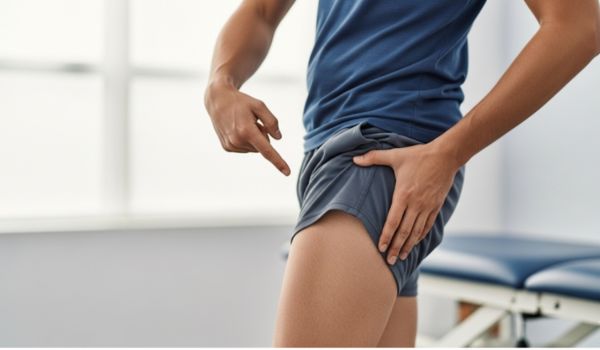
Hip osteoarthritis is a progressive condition that causes the cartilage in your hip joint to gradually break down. A tight Tensor Fasciae Latae pulls on the hip joint, creating unnatural friction that can accelerate this process. This highlights why it’s so important to address TFL tightness early, to protect your joints for the long term.
Tension and Tightness
When your TFL is tense, it forces other muscles to work harder. This can lead to widespread tension and tightness throughout your quadriceps and hamstrings. This can make simple movements feel difficult. It also puts you at a higher risk of other muscle strains and injuries down the line.
Knock Knee Postures
A tight Tensor Fasciae Latae can literally pull your legs out of alignment, creating what is known as a knock-kneed posture. This posture puts extra stress on the inner part of your knee and ankle joints. It can lead to pain and instability. Correcting your Tensor Fasciae Latae can help improve this posture.
Anterior and Lateral Pelvic Tilt
Your pelvis is the foundation of your body. When the TFL is tight, it can pull your pelvis forward, creating an anterior pelvic tilt. This also puts extra stress on your lower back. It can also pull one side of your pelvis up, causing a lateral pelvic tilt. This can lead to a host of problems from your feet to your neck.
Signs and Symptoms of TFL & IT Band Problems
Symptoms of Iliotibial Band Syndrome (ITBS)
If you have ITBS, you will likely feel a sharp or burning knee pain on the outside of your leg, just above the joint. This pain might start mildly but get worse as you exercise. It may even become so severe that it forces you to stop your activity entirely.
What Does Iliotibial Band Syndrome Feel Like?
The pain can feel like a hot knife in your knee. Some people report a snapping or popping sound when they bend and straighten their knee. The area might be tender to the touch, and you could see some slight swelling. It’s an unmistakable kind of discomfort.
What Causes Tensor Fasciae Latae Pain?
“Can a tight TFL cause hip pain?” The answer is a resounding yes. Tensor Fasciae Latae pain is often described as a deep, aching sensation in your hip and outer thigh. You might have trouble sleeping on the affected side. It can also be very sore to the touch.
Diagnosing TFL and IT Band Issues
How Is Iliotibial Band Syndrome Diagnosed?
A doctor or physiotherapist can usually diagnose ITBS with a simple physical exam. They will perform specific tests to check for tenderness and tightness. This is often enough to determine the problem without needing expensive imaging tests like X-rays or MRIs.
Tests Done to Diagnose Iliotibial Band Syndrome (ITBS)
To “how to diagnose TFL injury,” healthcare providers may perform a variety of tests. One such test is the Ober’s test. You lie on your side, and the provider lifts your leg and bends your knee. They then lower it. If your leg stays elevated instead of dropping, your IT band is probably very tight. This is a common indicator of ITBS.
Questions a Healthcare Provider Might Ask
When you get a professional opinion, be prepared for lots of questions. A doctor will want to know about your activity level and the specific location of your pain. Your doctor will inquire about the pain’s onset and what makes it either feel better or worsen. This helps them build a complete picture of your condition.
Why Stretching the IT Band Is So Difficult

The Unique Structure of the IT Band
You’ve likely heard that you need to stretch your IT band, but that is a bit of a misnomer. The IT band is not a muscle; it’s a dense, strap-like tendon. It’s more of a tough, fixed rope than a stretchy elastic band. This makes it incredibly difficult to lengthen.
Challenges in Releasing IT Band Tension
This is where the magic happens. You don’t try to stretch the IT band itself. Instead, you focus on the muscles that attach to it, primarily your TFL and your glutes. By easing the tension in the attached muscles, you indirectly take the strain off the IT band itself. This is the key to lasting relief.
A 6-Pose Yoga Sequence to Release the IT Band and TFL
If you are looking for “yoga poses for IT band tightness,” then this simple flow is for you. The gentle, sustained poses of yoga are perfect for releasing deep muscle tension. Here are six poses that will help you work out the kinks in your TFL and IT band.
- Wind-Relieving Pose: While on your back, gently pull your knees toward your chest. Gently rock from side to side.
- Happy Baby: From your back, grab the outside edges of your feet, opening your knees wider than your torso.
- Dead Pigeon: Lying on your back, cross one ankle over the opposite knee and gently pull your bottom leg towards your chest.
- Reclining Knee-Down Twist: Lie on your back and let both knees fall to one side while you look the other way.
- Seated Half Spinal Twist: Sit with one leg bent, foot on the floor. Pull your bent knee toward your chest while your other leg is crossed over it.
- Low Lunge with Sidebend: From a lunge position, raise your same-side arm up and over your head, bending to the side.
Effective TFL Stretches and Tests
If you are wondering “how to stretch the TFL” for targeted relief, there are several methods you can use. The goal is to lengthen and release the muscle, not just to tug on the IT band.
- Static Standing Tensor Fasciae Latae Stretch: Stand with the leg you want to stretch crossed behind your other leg. Press your hips sideways to feel a deep stretch in your outer hip.
- Active Progressive Tensor Fasciae Latae Stretch: This involves movement. Stand in the same position as the static stretch. Then, slowly bend down into a shallow squat. You are actively engaging the muscle and stretching it simultaneously.
- Active 4-Point Tensor Fasciae Latae Stretch: Begin on your hands and knees. Move your hips back and to the side away from the leg you want to stretch. This targets the TFL by putting it in a position of elongation.
- Supine Tensor Fasciae Latae Stretch: Lie on your back and cross your injured leg over the healthy one. Pull the healthy leg towards you to increase the stretch on the injured side.
A simple test to see if your TFL is tight is the Tensor Fasciae Latae Length Test. Lie on your back with both legs straight. Have a partner lift your leg and gently guide it out to the side. If you have significant tightness, your leg will not easily drop back towards the midline.
Treatment and Recovery for TFL and IT Band Injuries
How to treat ITBS?
“How to treat ITBS” is a question with a clear answer: rest and pain management. The first step is to stop the activity that is causing the pain. Using ice on the inflamed area for 15 minutes at a time can help reduce swelling. Over-the-counter pain relievers can also provide temporary relief.
Biomechanical Correction for TFL Tightness
When it comes to Tensor Fasciae Latae tightness, just stretching isn’t enough. Exercises to strengthen hip muscles are your most powerful tool for lasting relief. A physiotherapist can help you with this. They will give you exercises to strengthen your glutes, hamstrings, and core. This will take the pressure off your TFL. This kind of rehabilitation is essential for lasting relief.
Managing and Treating IT Band Syndrome
The recovery time for TFL strain can vary. A mild case might resolve in a few weeks with rest and stretching, while a severe injury could take months. Your treatment plan may include physical therapy, foam rolling, and corrective exercises. In very rare cases, a doctor might recommend a cortisone injection or even surgery. The key to a good outcome is finding a personalized approach that’s effective for you.
Advanced Topics: TFL Injury and Surgical Considerations
Everything You Need to Know About TFL Injury
While most TFL issues are related to tightness, a severe overuse injury can lead to more serious conditions like Gluteal tendinopathy, which is chronic inflammation of the gluteal tendon near the Tensor Fasciae Latae. It can be very stubborn to treat. In some cases, a doctor might need to refer you to a specialist for further evaluation.
Tensor Fascia Lata (TFL) Muscle Flap
For severe injuries, a surgeon may consider a Tensor Fascia Lata (TFL) muscle flap. This is a complex surgical procedure where the Tensor Fasciae Latae muscle is used as a graft. It is still attached to its nerve and blood supply. This flap can be used to repair damaged tissue in another part of the body. It is a very specialized procedure.
Anatomic Considerations
The TFL is often used for this type of procedure because of its robust blood supply. It can be a very versatile tool for a microsurgeon. This is a testament to the resilience of the TFL and its importance in the body.
Conclusion: Maintaining a Healthy TFL and IT Band
So, “what is the difference between TFL and IT band issues?” They are inextricably linked, with Tensor Fasciae Latae tightness often being the root cause of IT band pain. The key to fixing it is not just stretching the symptom, but addressing the underlying muscle imbalances and weakness.
Do not wait for pain to appear. A proactive approach to pain management and prevention is your best bet. Incorporating regular stretching and strengthening exercises into your routine can save you from a world of hurt. A healthy TFL and IT Band mean a healthier, happier you.
FAQ
What is the tensor fasciae latae?
The tensor fasciae latae (TFL) is a small muscle on the outside of your hip. It is connected to the iliotibial band and helps to stabilize the hip and knee joints.
What is the function of the tensor fasciae latae?
The primary function of the Tensor Fasciae Latae is to assist in hip flexion, abduction (lifting the leg to the side), and internal rotation. It also helps to keep the pelvis stable while you stand or walk.
Is the TFL your hip flexor?
Yes, the TFL is a hip flexor, though it is not the main one. It works with other muscles to bring your leg up toward your chest.
What causes pain in the tensor fasciae latae?
Pain in the Tensor Fasciae Latae is typically an overuse injury caused by muscular imbalances, where the TFL overcompensates for weak gluteal muscles. Repetitive motions from activities like running often lead to this pain.
What does TFL pain feel like?
TFL pain often feels like a deep ache or soreness on the outer hip, just below the bone. It can also present as a pulling sensation and may be tender to the touch.
Why does my TFL keep getting tight?
Your Tensor Fasciae Latae often stays tight because it’s overworked, compensating for weak gluteal muscles. This constant work causes it to become chronically tight as a defense mechanism.
What happens if Tensor Fasciae Latae is tight?
A tight TFL can lead to issues such as altered gait, a snapping sensation in the hip, and increased strain on the knee joint. Over time, it can contribute to postural problems like anterior pelvic tilt.
How to tell if TFL is tight?
A physical therapist can perform a simple test, like the Ober’s Test, to check for TFL tightness. During the test, a tight Tensor Fasciae Latae will prevent your leg from fully dropping when it is lowered.
How do you release a tight tensor fasciae latae?
You can release a tight TFL by performing targeted stretches, using a foam roller, and strengthening your glutes. This relieves the strain on the muscle.
How long does tensor fasciae latae take to heal?
The healing time for a TFL injury varies. A mild strain or tightness may resolve in a few weeks with rest and stretching, but a more severe injury can take several months to heal with consistent physiotherapy.
Why does my iliotibial tract hurt?
The iliotibial tract, more commonly called the IT band, becomes painful due to constant rubbing. It is a very strong band of connective tissue that rubs against a bony part of the knee during repetitive motions, leading to pain and inflammation.
How do you relieve iliotibial band pain?
To relieve iliotibial band pain, rest from the aggravating activity and apply ice to the area. Stretching the muscles that attach to the band, like the TFL and glutes, will also help to reduce tension.
How serious is Iliotibial band syndrome?
Iliotibial band syndrome (ITBS) is generally not serious from a medical standpoint. It is a very common overuse injury that responds well to conservative treatments like physical therapy and rest.
What muscles attach to the iliotibial tract?
The two main muscles that attach to the iliotibial tract are the tensor fasciae latae and the gluteus maximus. These muscles work together to provide tension to the IT band.
What is the difference between the fascia lata and the TFL?
The fascia lata is a deep layer of connective tissue that encases all the muscles in the thigh. The Tensor Fasciae Latae is a specific muscle located within this larger sheath of connective tissue.

I am Muddasir Tahir, a dedicated Lifestyle strategist and fitness expert with over 5 years of professional experience. I launched Lifestyle Dominates to serve as your primary source for building mental clarity and physical power. My goal is to give you the tools to improve your daily productivity and overall health. I focus on providing science-backed advice to help you take full control of your modern life.